Four Years of Russia’s War in Ukraine: A Visual Testimony
On the anniversary of Russia’s full-scale invasion of Ukraine, we asked documentary photographers to choose one image from the past four years — a photograph that has stayed with them, personally or professionally. Each image captures a different encounter with the war. Together, they map a country living through sustained aggression, documenting loss and resistance, destruction and endurance, rupture and care. Each photograph is presented alongside the photographer’s own words as a brief reflection on why the image matters, and what it holds beyond the frame. These are specific, lived moments. Through them, the war is seen in its consequences and its human cost.
Lviv Railway Station, 24 February 2022
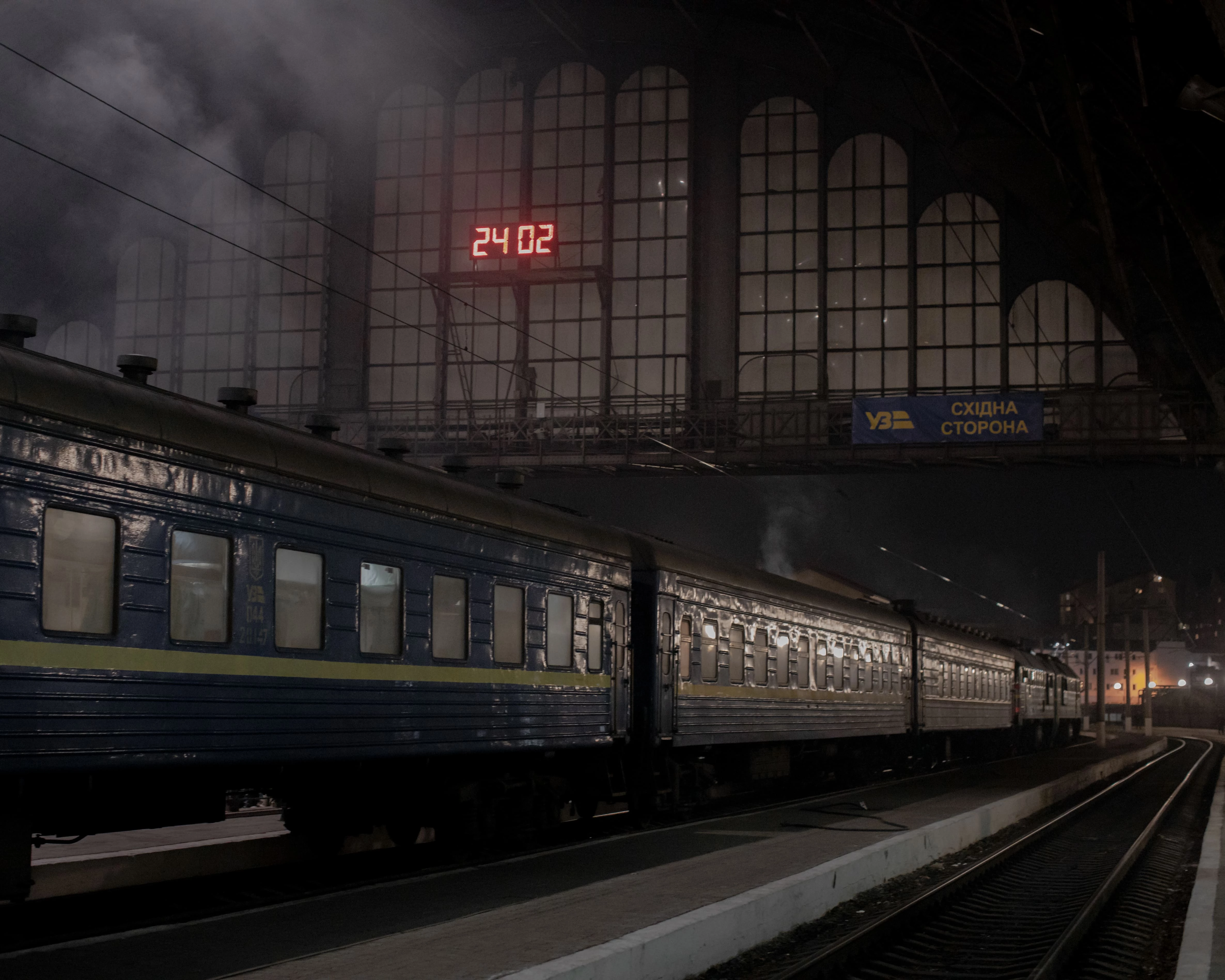
"7:31 p.m., 24 February 2022. Sixteen hours earlier, Russia launched its full-scale invasion of Ukraine. Above the platform, the electronic board glows red: 24.02. At Lviv Railway Station, a train stands ready to depart for the Polish–Ukrainian border. Inside, hundreds of people wait to leave. Ahead lies a 70-kilometre journey — about an hour and a half — to the first relatively safe station. Behind them are their homes, families, friends, jobs, and the lives they knew. This marked the beginning of a new reality, as Russian missiles and bombs began destroying their cities. At 03:40 a.m. on 24 February 2022, the world that had seemed stable and familiar ceased to exist," — Jędrzej Nowicki, @jnowickiphoto.
A man mourns a family member killed in an attack, 24 February 2022
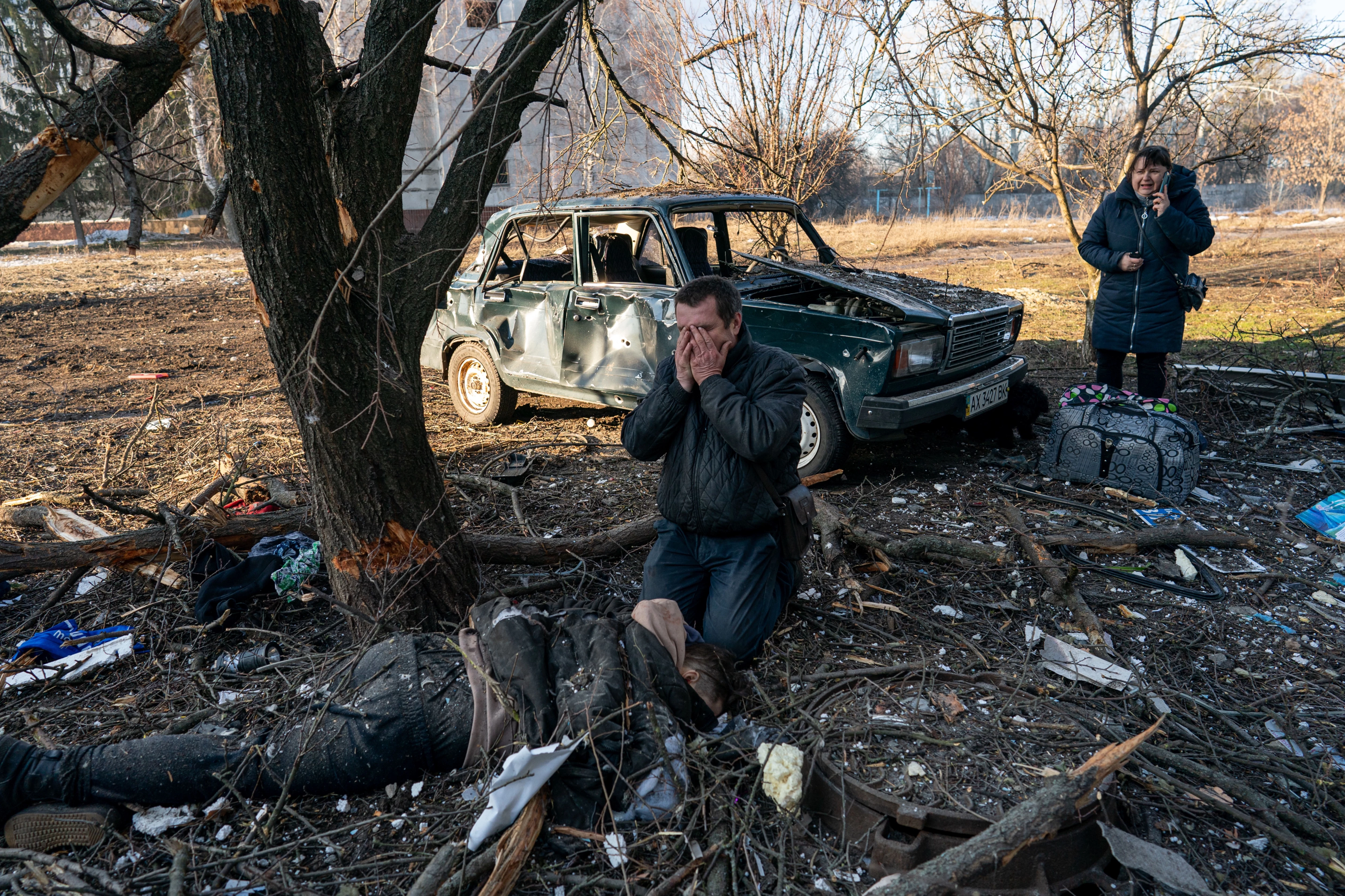
"On the morning of the first day of Russia’s full-scale invasion of Ukraine, two colleagues and I photographed the aftermath of a missile strike in a residential area of Chuhuiv, in the Kharkiv region. This image was taken just before 8 a.m. It shows one of the first civilians killed in the war. I chose this photograph because it reflects what Russia’s aggression in Ukraine has meant from the very beginning. Civilians have been targeted from the first hours. Even far from the frontline, missile strikes remain a constant threat. That has been the reality for the past four years. For what? So that Russia can claim Donbas? So that it can extend its borders further? Over all this time, I have witnessed scenes like this hundreds of times, with no end in sight," — Wolfgang Schwan, @wolfgang_schwan.
Rescuers evacuate a woman from a destroyed residential building, 14 March 2022
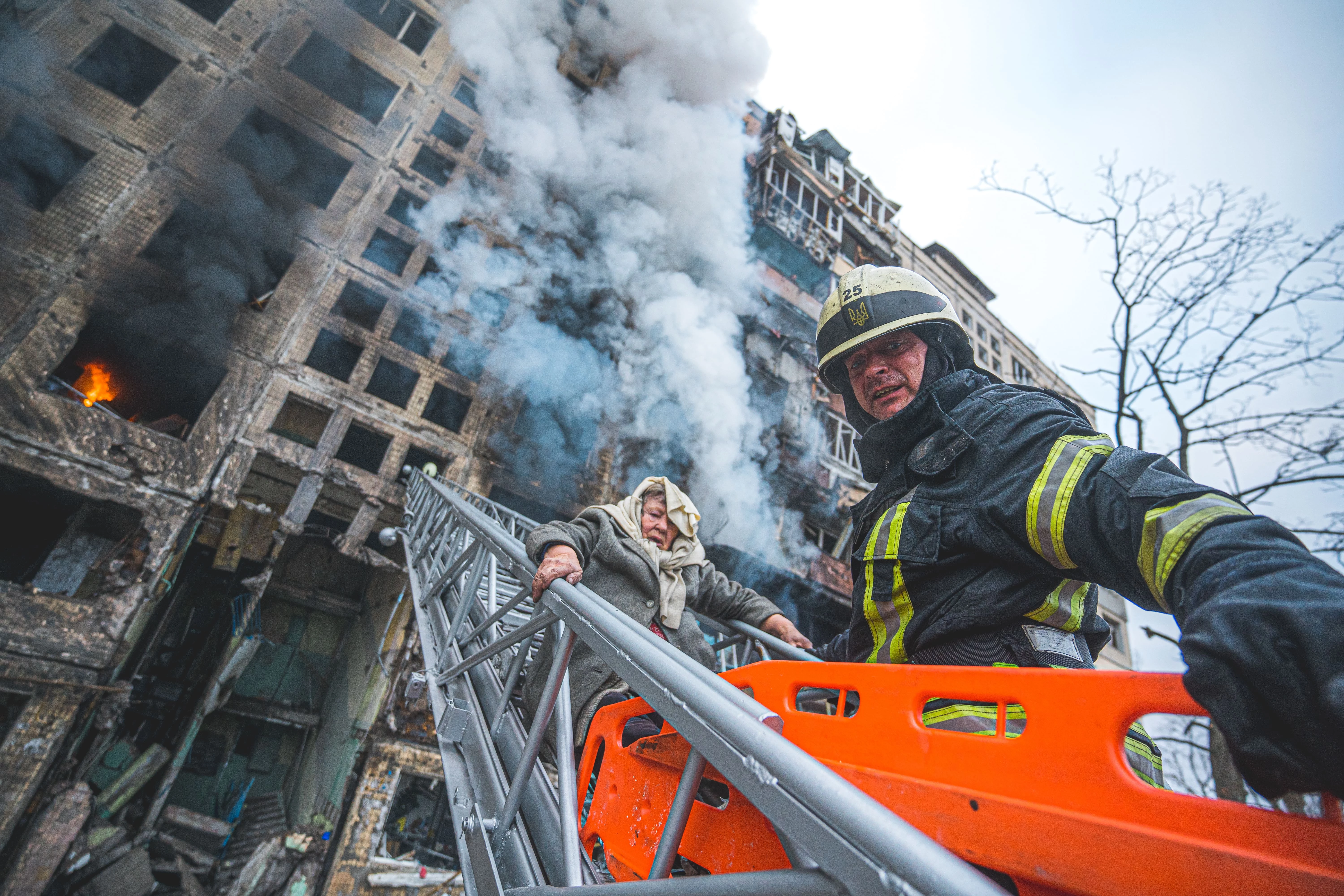
"This photograph was taken in the early days of Russia’s full-scale invasion, after one of the first large-scale strikes on residential buildings in Kyiv. That day, emergency crews rescued more than 20 people. Most were unable to leave their apartments on their own: the blast had destroyed the stairwell, and smoke from a fire that spread through around ten flats quickly filled the corridors. For me, this marked the beginning of sustained attacks on Kyiv and the new reality firefighters and rescuers have faced ever since. Responding to the aftermath of such strikes has become part of their routine. Clearing rubble and stabilizing damaged buildings is now daily work," — Pavlo Petrov, @petrovp.photo.
People evacuated from Russian-occupied territories, 2 May 2022
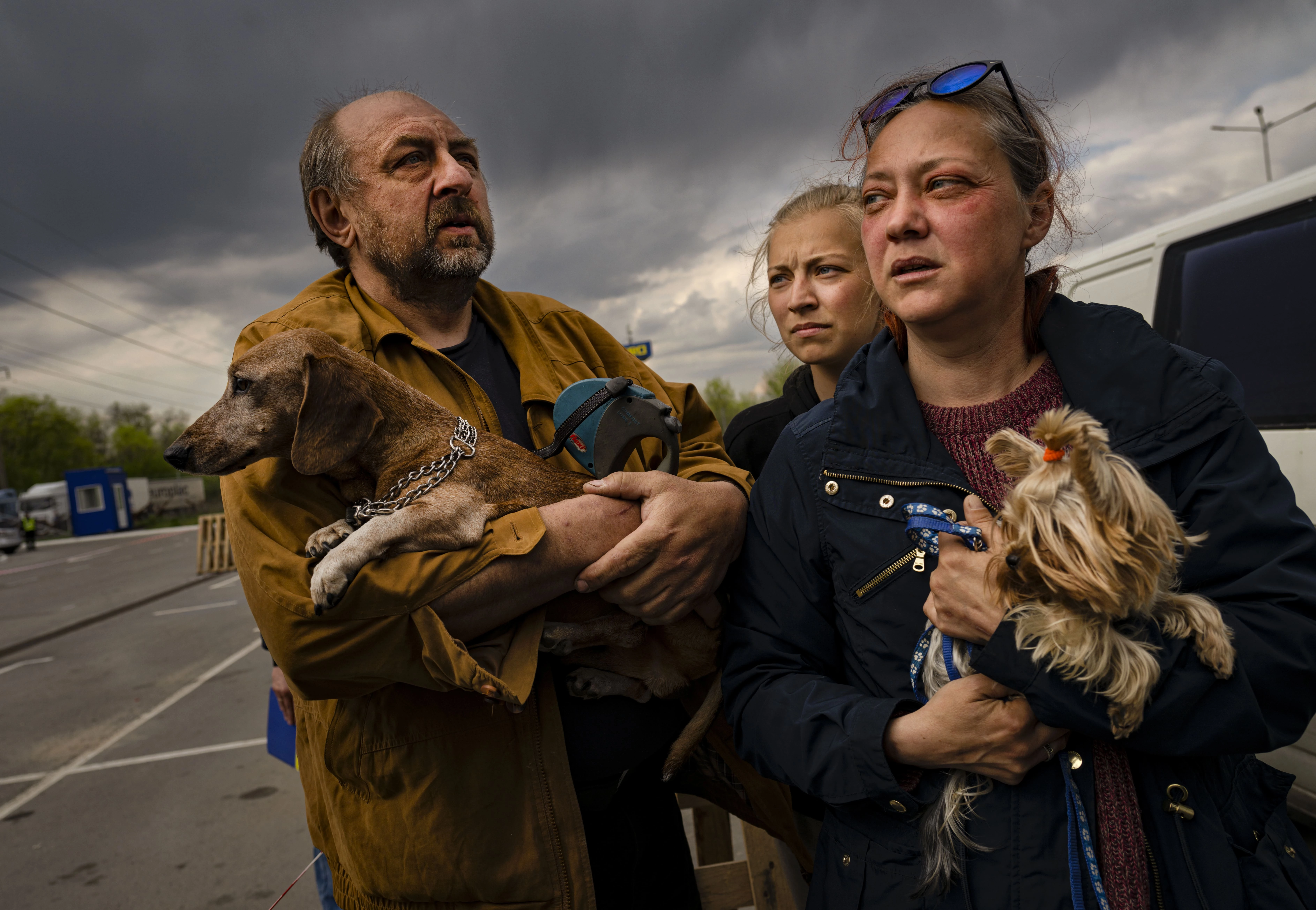
"As Russian troops tightened their grip on villages and cities across eastern and southern Ukraine, civilians lived in fear for months. Many spent days and nights in basement shelters, rarely seeing daylight. Some endured constant bombardment. Others made repeated attempts to leave, trying to reach a registration point in Ukrainian-controlled Zaporizhzhia. When they finally arrived, their faces reflected trauma and horror. I chose this photograph because their expressions have stayed with me. They still haunt me. In those faces, you can sense what they endured," — Lynsey Addario, @lynseyaddario.
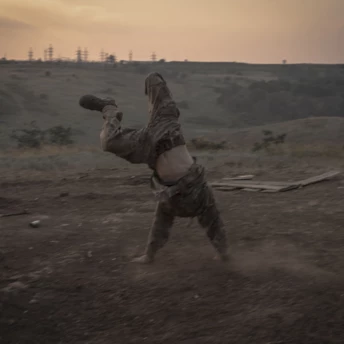
"Donbas, Baby," summer 2022
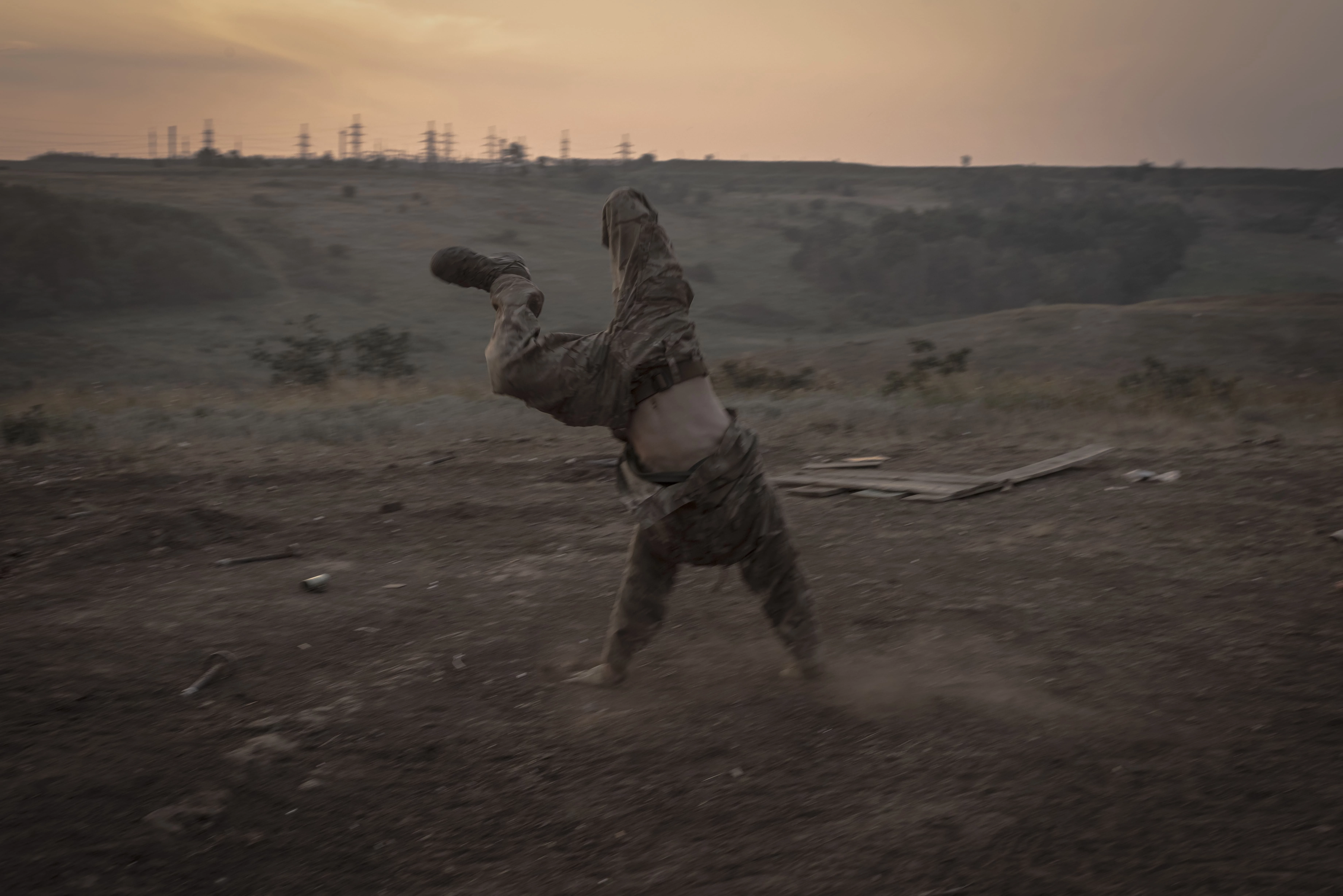
"A young Ukrainian soldier, 19, a boxer from Kyiv’s Troieshchyna neighbourhood, is photographed in Donbas doing a cartwheel in the dust at sunset. The image was taken in the summer of 2022, when I was embedded with the Gonor unit for several weeks. One evening, two soldiers were joking around. Suddenly, one of them leapt into the air, did a cartwheel, and shouted, ‘Donbas, baby!’ I chose this photograph because it captures an essential aspect of this war. He carries both the lightness of his age and the weight of the responsibility he has taken on. In that gesture, I saw not only a soldier, but a teenager — someone who should not have to be there, yet chose to be. The image is a reminder of who is fighting this war: young people, fathers, ordinary men whose lives were meant to unfold elsewhere," — Albert Lores, @albertlores.
Stabilization point and a soldier who survived, April 2023
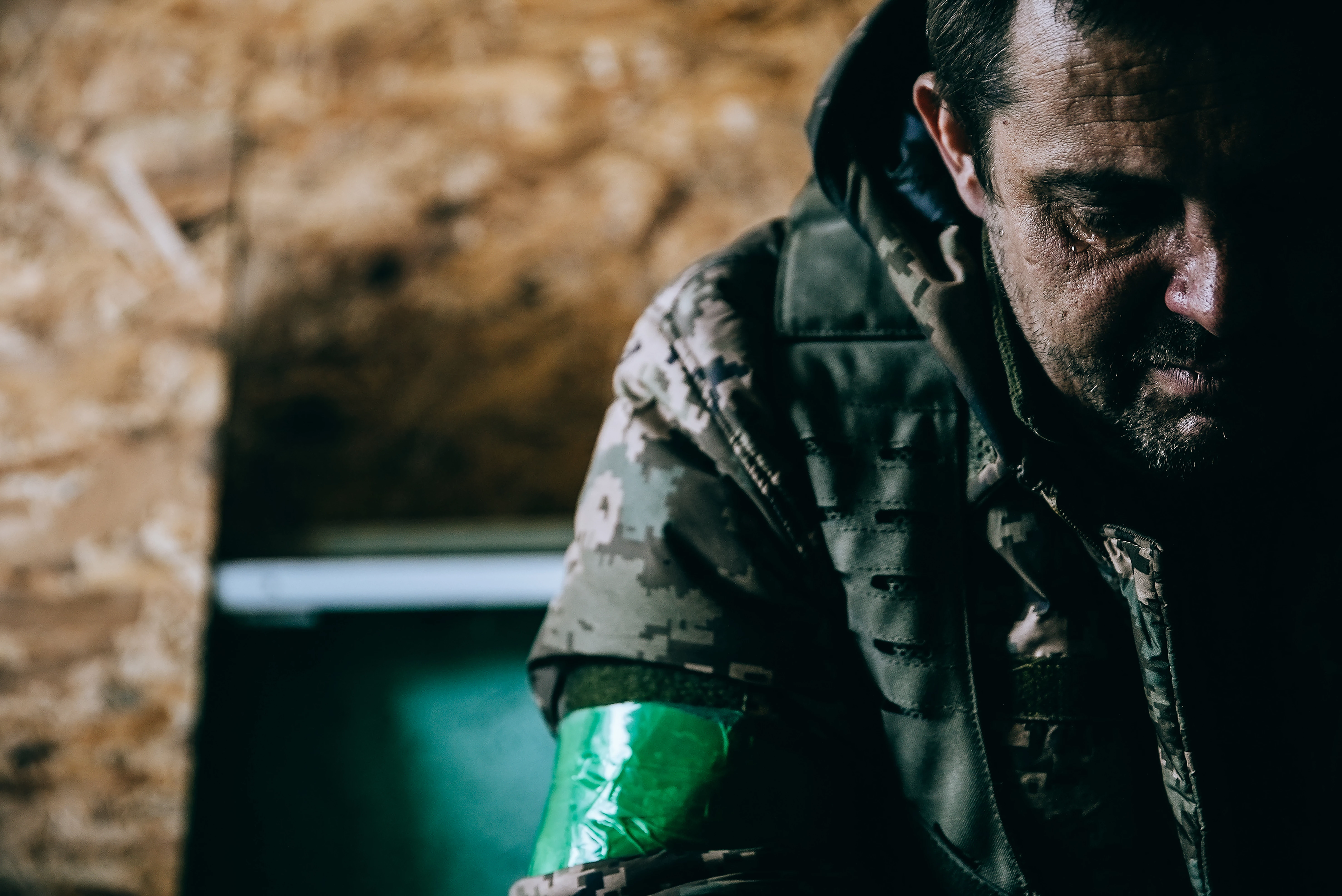
"This photograph is about the fact that my freedom rests in the hands of ordinary — and at the same time extraordinary — people. It reminds us that anyone can cry; that there are no superheroes or ‘iron’ men, and that men have the right to be vulnerable. It is also about the responsibility to share someone’s tears and to stay by their side," — Yuliia Kochetova, @seameer.
A wounded soldier in a trench, 5 September 2023
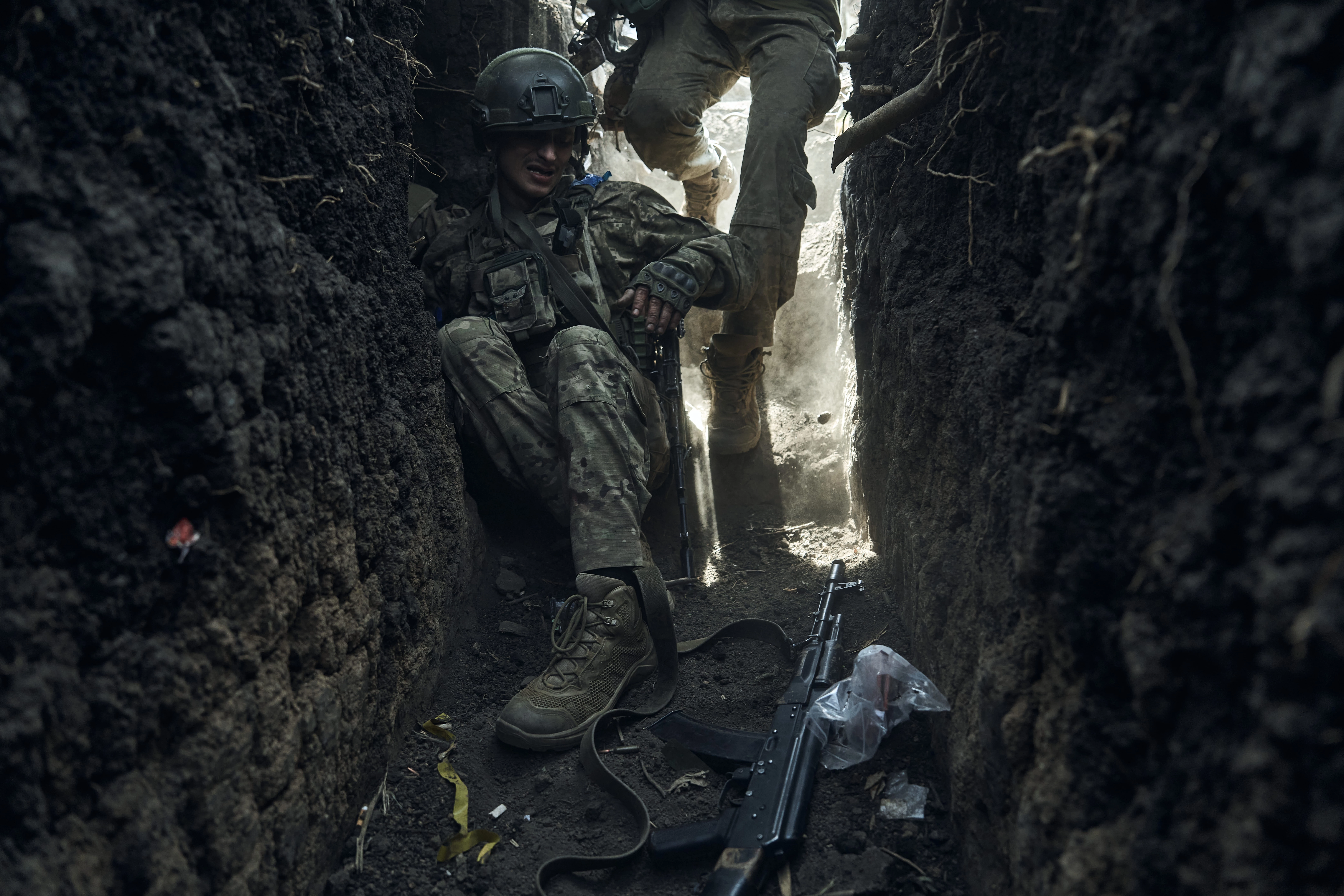
"Infantry positions of the Third Separate Assault Brigade on the zero line in the Donetsk region. During shelling, a soldier runs into a trench to reach a wounded comrade. Before the artillery strike, Russian forces dropped munitions containing gas," — Vlada and Kostiantyn Liberov, @libkos.
"White Angel," October 2023
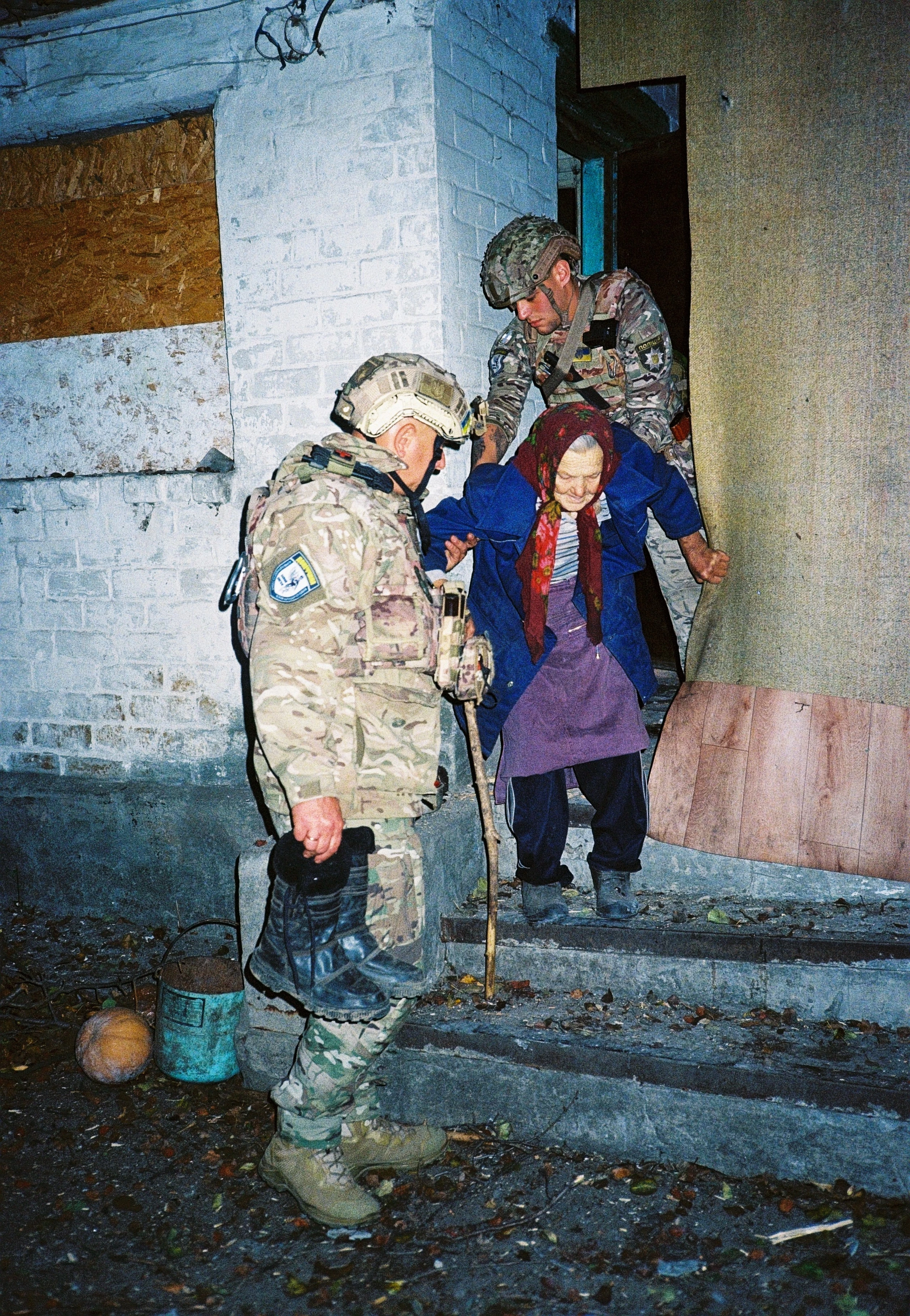
"Members of the White Angel police unit evacuate an elderly woman whose home was struck by a Russian Grad missile moments before this image was taken. I chose this photograph because it captures both the brutality of the war and the resilience of those living through it. Although she had been injured by shrapnel from the rocket and missiles were still flying overhead, she insisted on making herself presentable. She carefully arranged her hair beneath her headscarf before allowing the officers to take her to hospital," — Conall Kearney, @cocobongo666.
Two brothers in Kurakhove, Donetsk region, February 2024
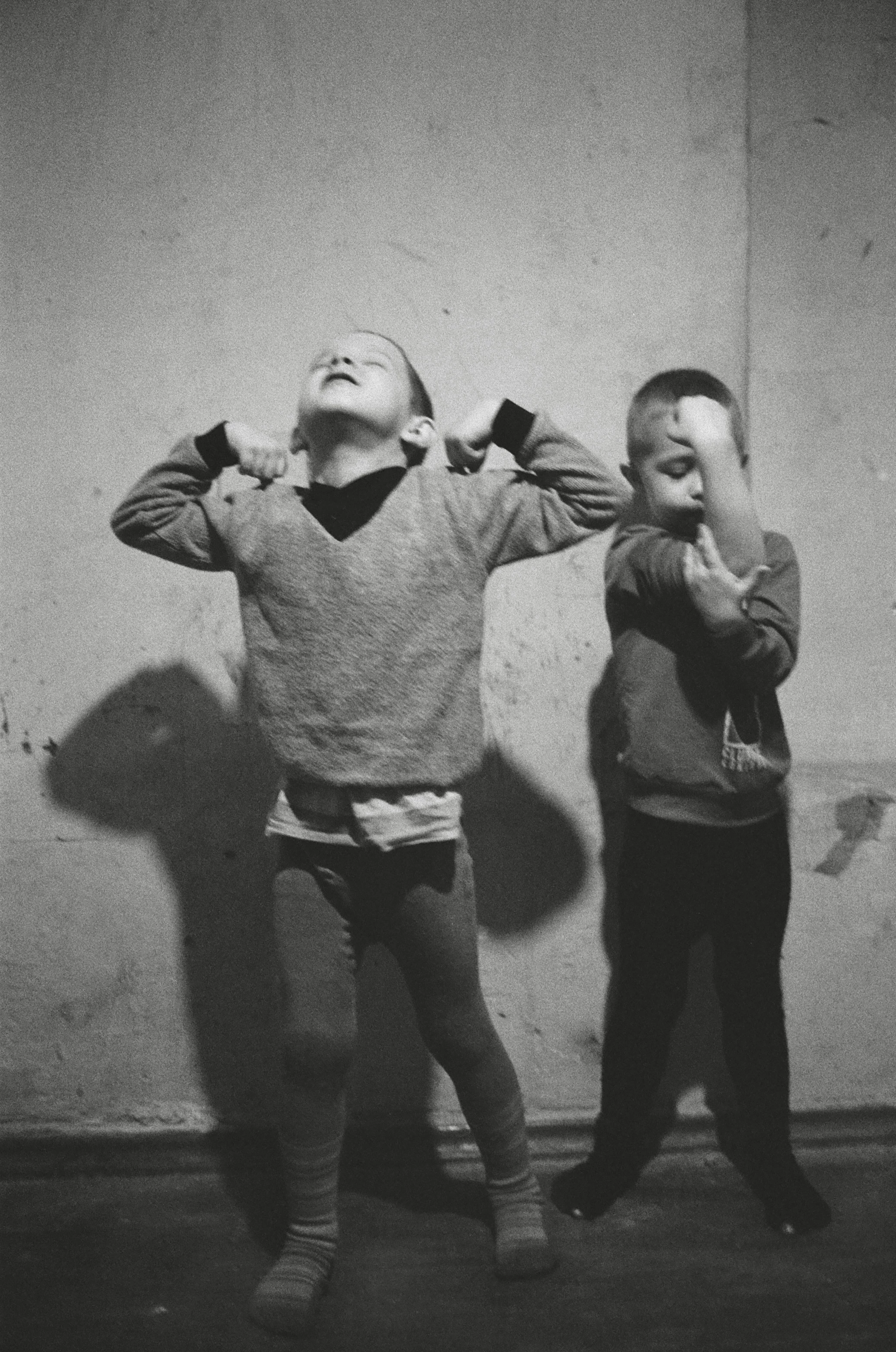
"This photograph shows two brothers playing inside their home. They were part of a family of eight living near Kurakhove in the Donetsk region in 2024. At the time, the town was under constant shelling, and Russian forces were advancing quickly. I was there with friends from Base UA NGO. With support from a private donor, they had found a house for the family in a safer area near Kyiv. We came to help them pack before they got into a car and left their home, likely never to return. By mid-January 2025, Kurakhove had been fully occupied by Russian forces. That night has stayed with me. It was cold and dark. Shelling could be heard in the distance — a steady reminder of the war nearby. But the children seemed untouched by it in that moment. As kids often do when strangers are around, they started to perform, turning the room into a stage and the moment into something lighter," — Joshua Olley, @joshua.olley.
Soldiers before an assault, June 2024
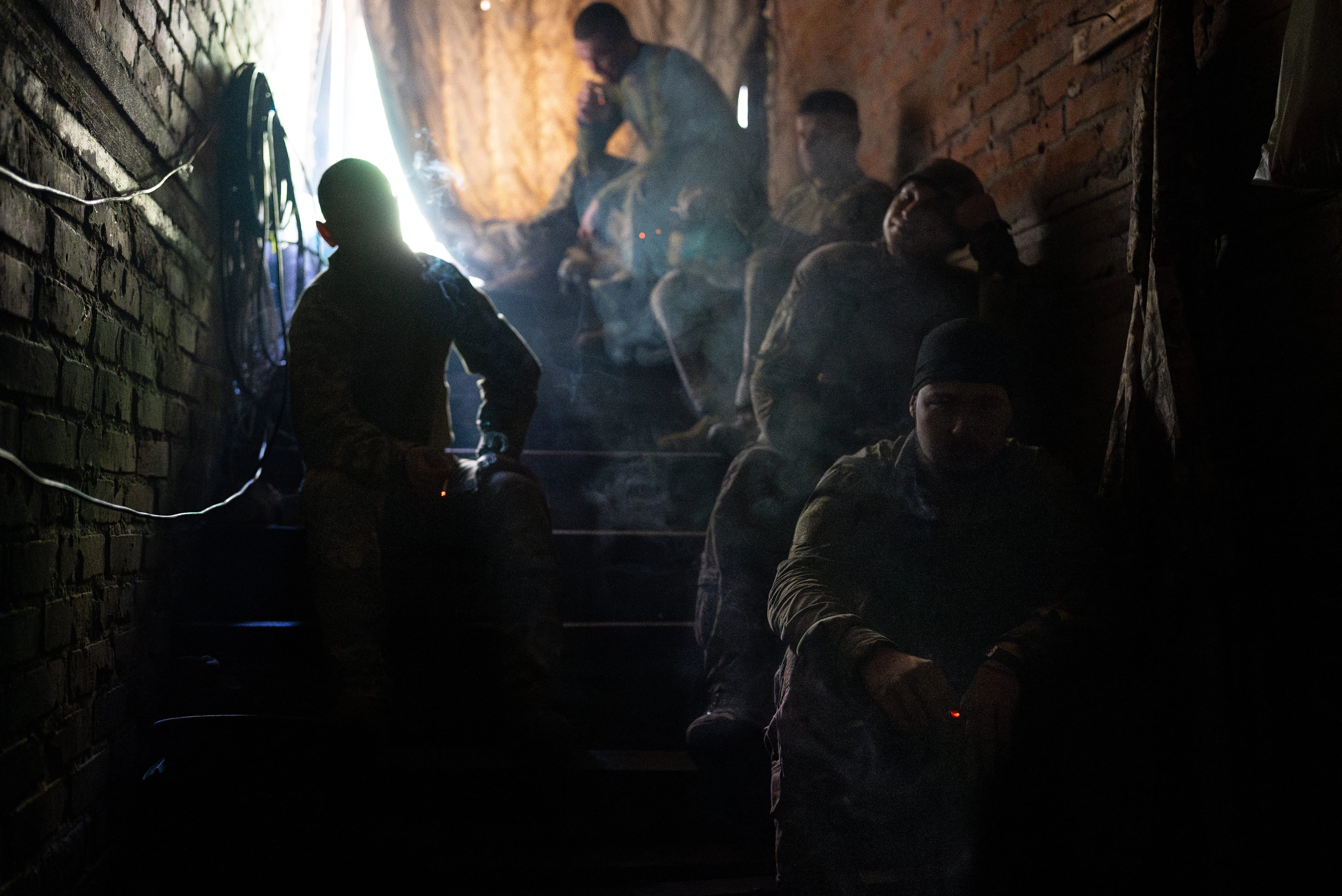
"Soldiers of the Second Mechanized Battalion of the Third Separate Assault Brigade smoke on the steps of a command post before heading out on an assault. Inside, the air is thick and hard to breathe. Dozens of them spend days and nights underground, because any movement in daylight can be spotted by enemy drones. It smells of sweat, damp concrete, and earth. Groups leave one after another. I try not to get too attached to the new faces. I try not to remember them too clearly, so it won’t hurt as much if someone doesn’t come back. Later, I learn that one of the soldiers has gone missing in action. My photographs were the last images of him alive. I chose this photograph because the infantry carries so much of this war, and it is becoming harder and harder to document what they do. On the anniversary of Russia’s full-scale invasion, I think of everyone I have lost," — Alex Babenko, @alexxbabenko.
Alisa on her first day of kindergarten, Poltava region, 2024
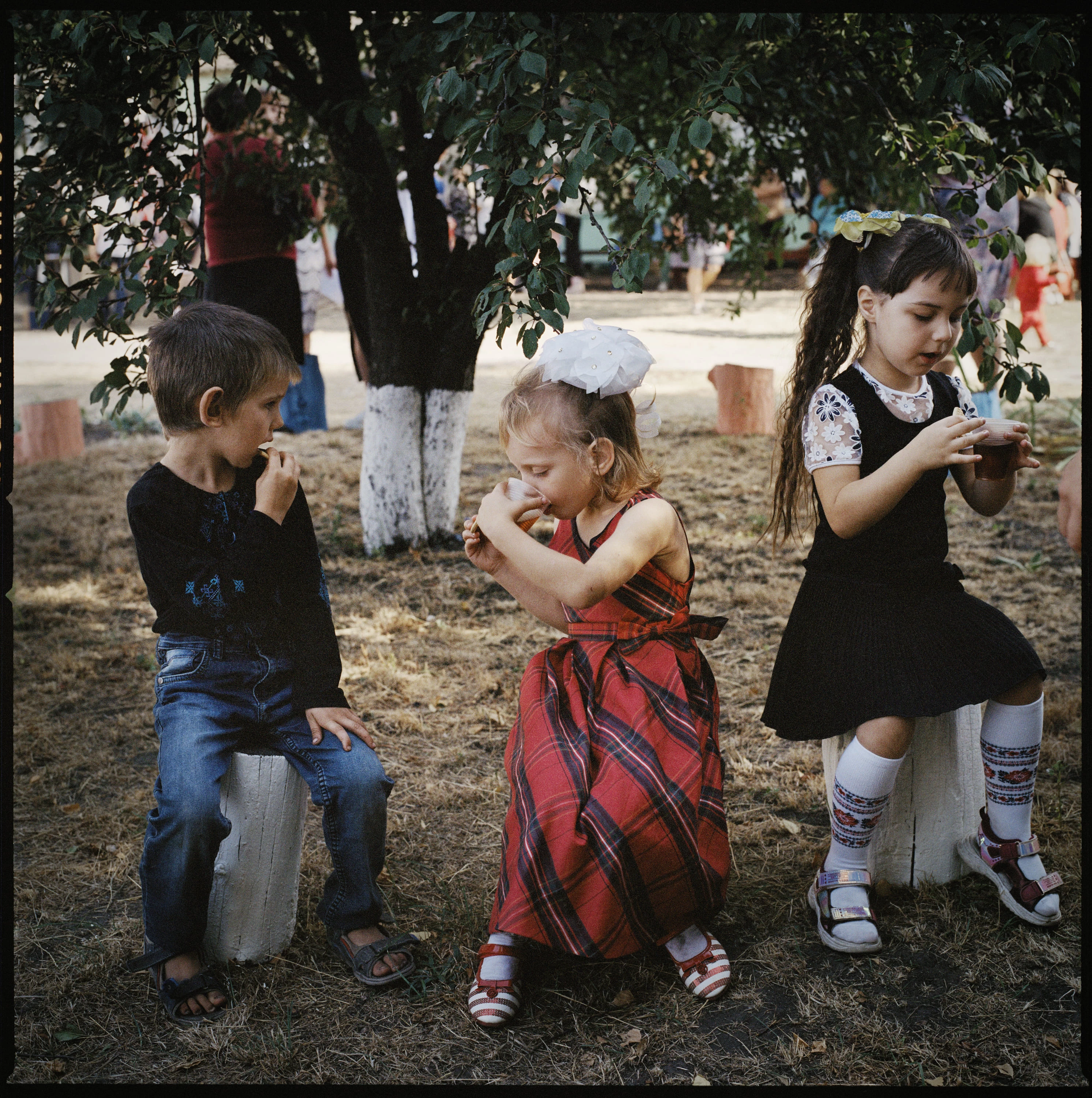
"I have been photographing Alisa’s extended family since 2018. They lived in Avdiivka until 2022, when they fled to the Poltava region to escape Russia’s full-scale invasion. Alisa’s father serves in the Armed Forces of Ukraine, as do all the men of fighting age in the family. I love this image — the careful choice of a dress and shoes for the first day of the new school year, and the deep concentration children have when they focus on something small and important to them. I photographed Alisa as a newborn, and it feels personal to see how much she has grown. In the middle of war and displacement, moments like this take on a different meaning," — Anastasia Taylor-Lind, @anastasiatl, @5kfromthefrontline.
"Sofia and Echo," Kharkiv region, 24 October 2024
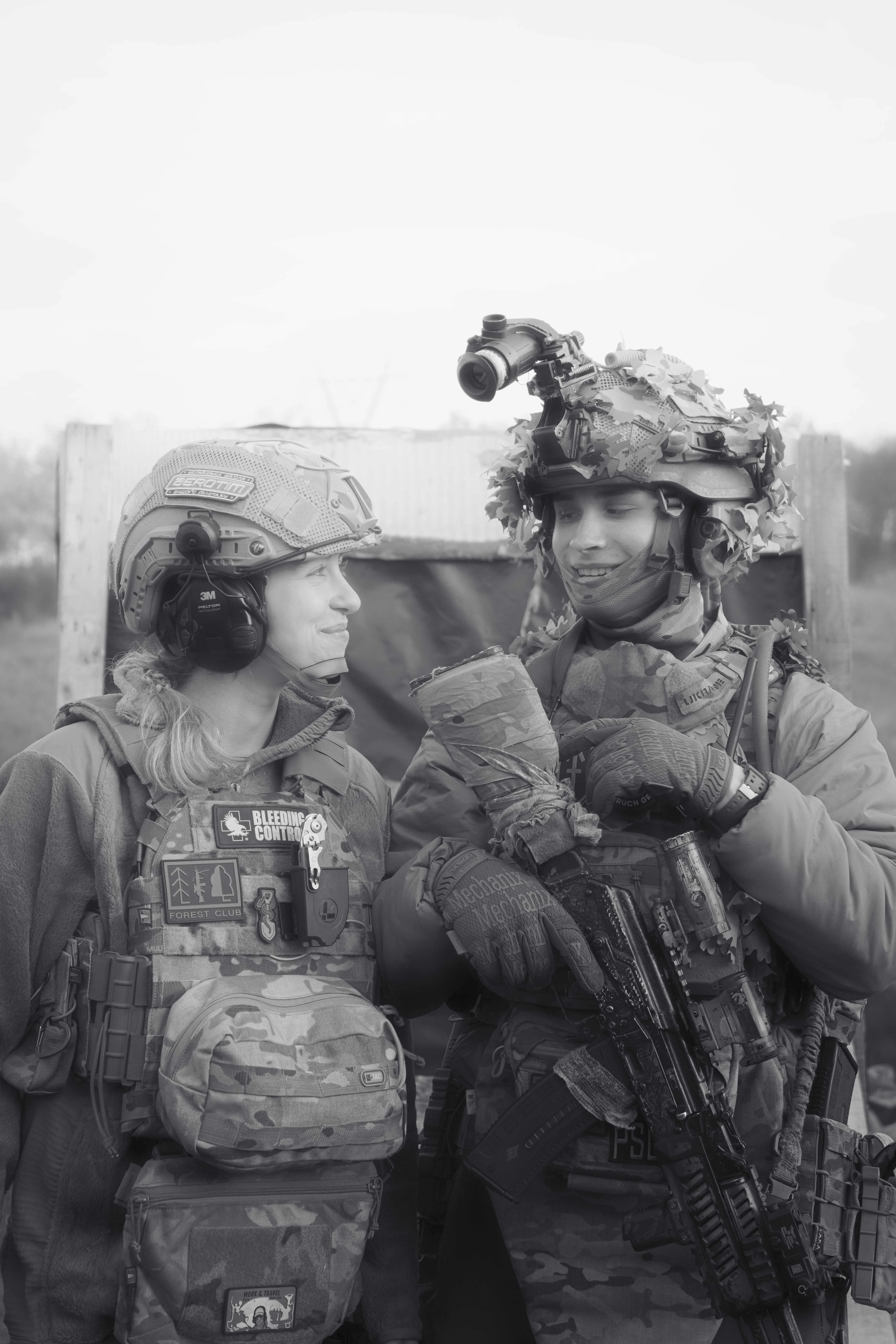
"In the photograph are my close friends, Sofia and Bohdan ‘Echo,’ training at a range. They are a young couple serving together in the Third Separate Assault Brigade. Their story began long before this moment. They have lived through Bohdan’s injury, time apart, and the routines of frontline life. Despite everything, their decision to stay together has only grown stronger. Sofia left her volunteer work in medical evacuation and joined the brigade to be near the man she loves. For me, this image shows that even in war, young people find love, support, and strength to remain side by side. It is about tenderness and the conscious choice to stand together — despite danger, exhaustion, and uncertainty. It reveals another side of this war: not only loss, but the ability to love, to grow up, and to hold on to one another in the most difficult circumstances," — Nikoletta Stoyanova, @okumena.
Solomiia returns to her mother from Russian-occupied territories, June 2025
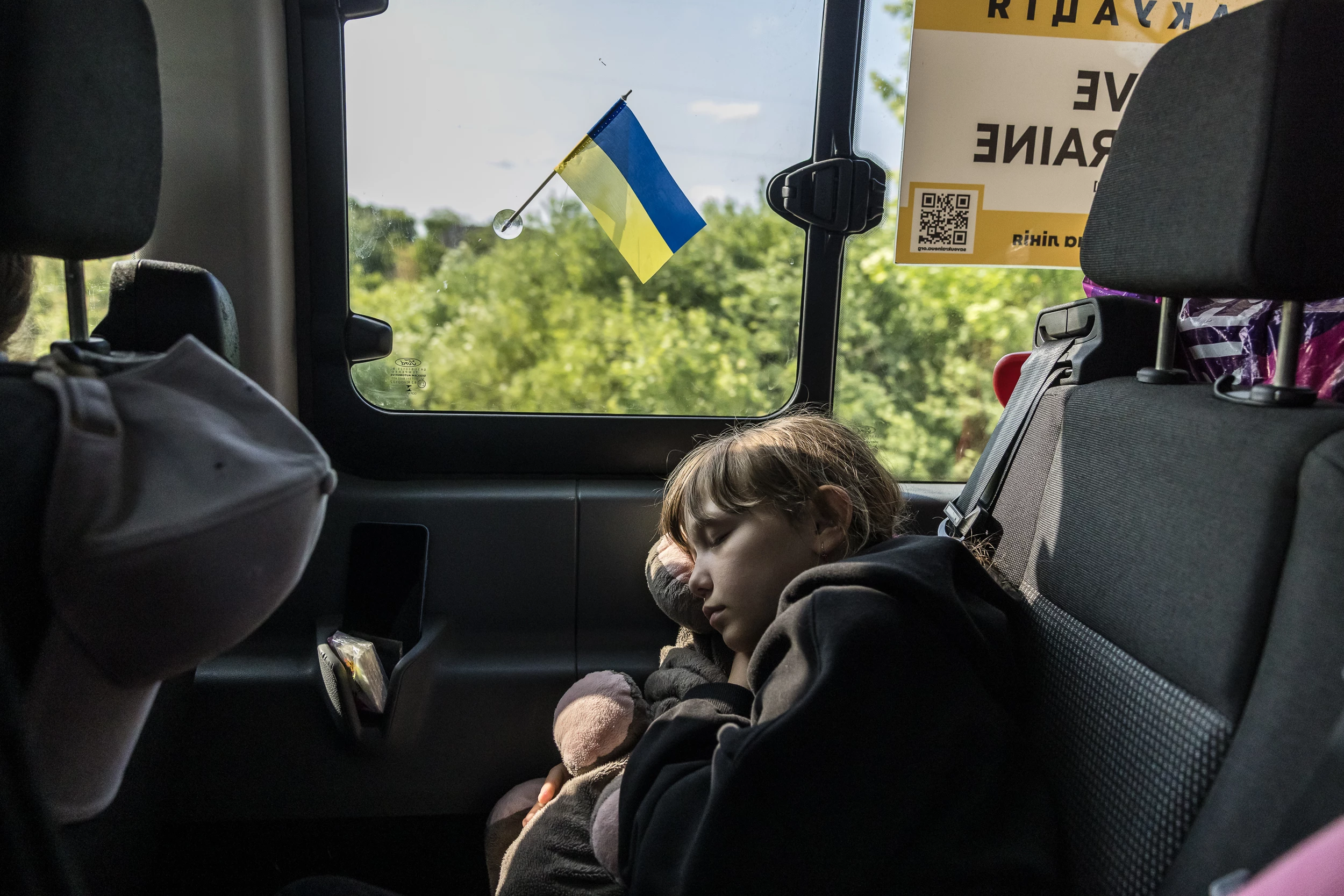
"In the photograph is nine-year-old Solomiia, asleep on a bus on her way to Kyiv, where she was to reunite with her mother after more than three years apart. Since the start of Russia’s full-scale invasion, she had been living under Russian occupation with her grandmother. After crossing back into Ukraine, volunteers gave her a small Ukrainian flag, which she carefully taped to the bus window. Her grandmother later recalled that within a minute of returning, Solomiia quietly asked whether she was now allowed to speak Ukrainian," — Oksana Parafeniuk, @oksana_par.
A reclaimed gas platform in the Black Sea, 2025
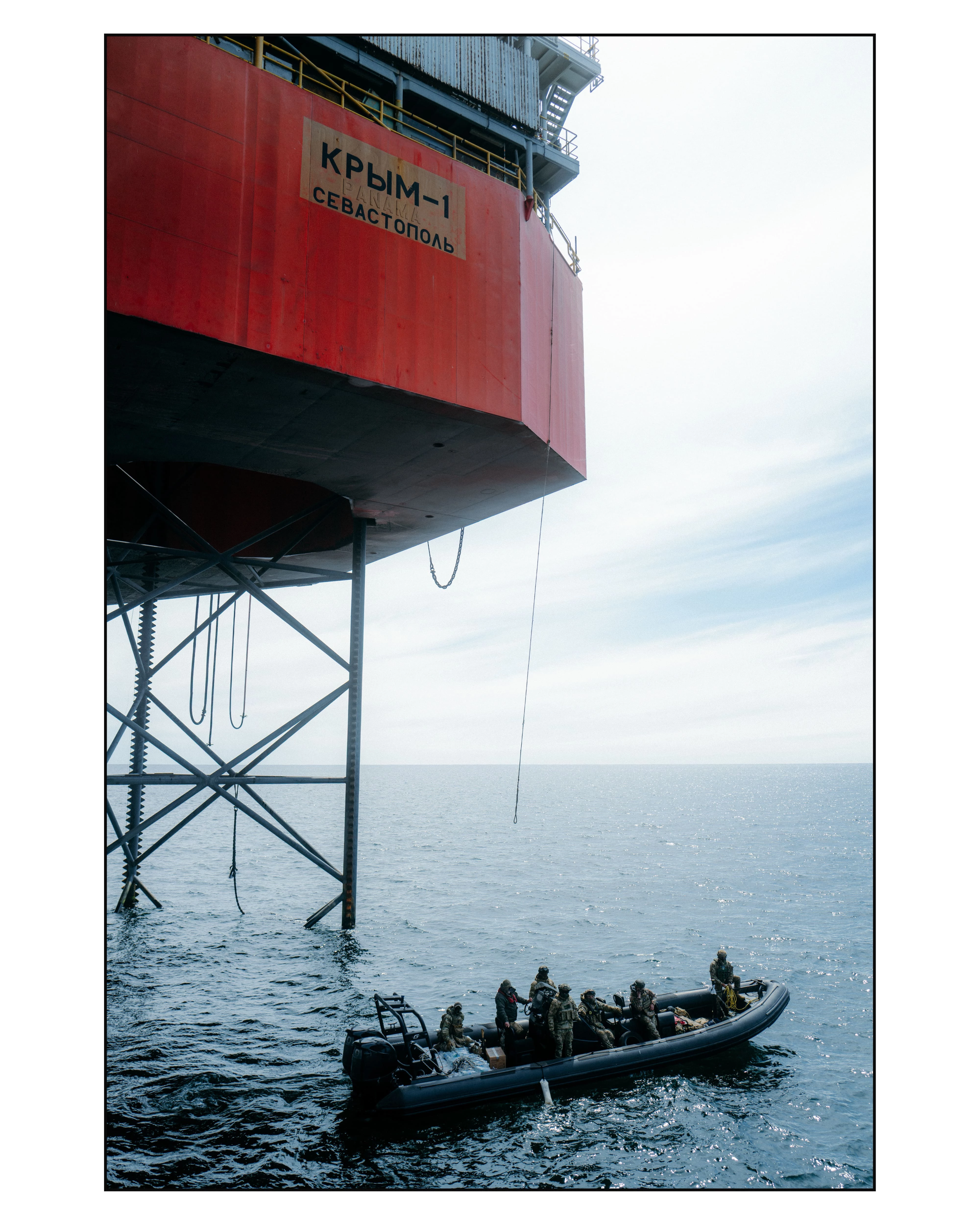
"In the Black Sea, there is a network of offshore gas platforms that Russia seized in 2014. Until the summer of 2022, Russian forces extracted Ukrainian gas from them and used the structures as military observation posts. After the full-scale invasion began and Snake Island was liberated, Ukraine launched a coordinated operation to retake them. Controlling these platforms means controlling a portion of the sea, safeguarding shipping lanes, and keeping the grain initiative running. While working on Oleksandr Nebylovych’s film Battles Near Crimea, I documented the service of fighters from the Tymur Special Unit stationed on these structures. Ukraine’s military intelligence played a key role in retaking the Tavryda and Ukraina rigs and continues to push Russian forces from other platforms. Service there is dangerous. The platforms are about 100 kilometers offshore. Evacuation can take up to eight hours. Enemy drones and aircraft operate overhead. For three years, the fighters have held and secured these sites, preventing Russia from expanding its control in the Black Sea. I have deep respect for those who continue this work," — Vitalii Yurasov, @yurasov.pro.
An apartment after a Russian strike, July 2025
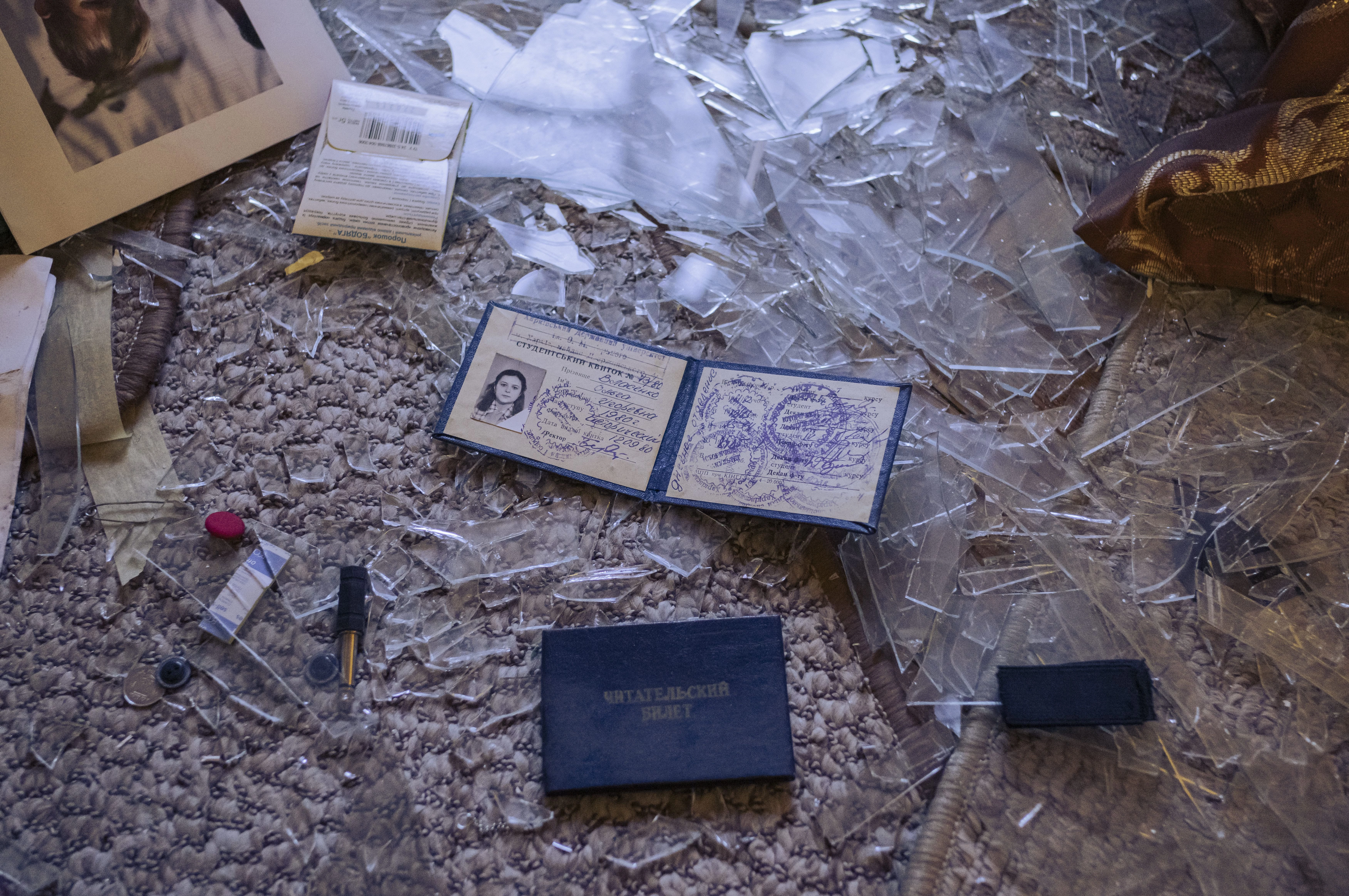
"I have walked into many destroyed apartments, but returning to one where you remember every corner is different. A Shahed drone struck the ninth floor of a block next to the building where I grew up. An elderly woman was killed. Two floors were destroyed. This time, the building remained standing — the blast did not cause a full collapse. She was asleep. I want to believe she felt nothing. My mother’s apartment is strewn with glass. Windows blown out, doors damaged, family photos scattered. Another explosion. Black smoke rising a few kilometers away. I pack a few important things to take to Kyiv — it’s safer there. On a video call, I show my mother the damage, moving the camera quickly past the worst parts. I think: maybe now she will stop wanting to return to Kharkiv. As we say goodbye, she asks if it will be over by September. The next morning, I wake up on a train, scrolling through air raid alerts. A colleague texts that another apartment block has collapsed in Kyiv’s Solomianskyi neighbourhood — a building like ours, but less fortunate," — Sasha Maslov, @maslovsaslov.