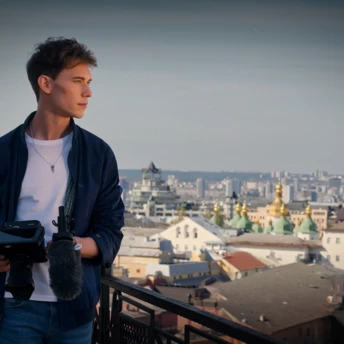
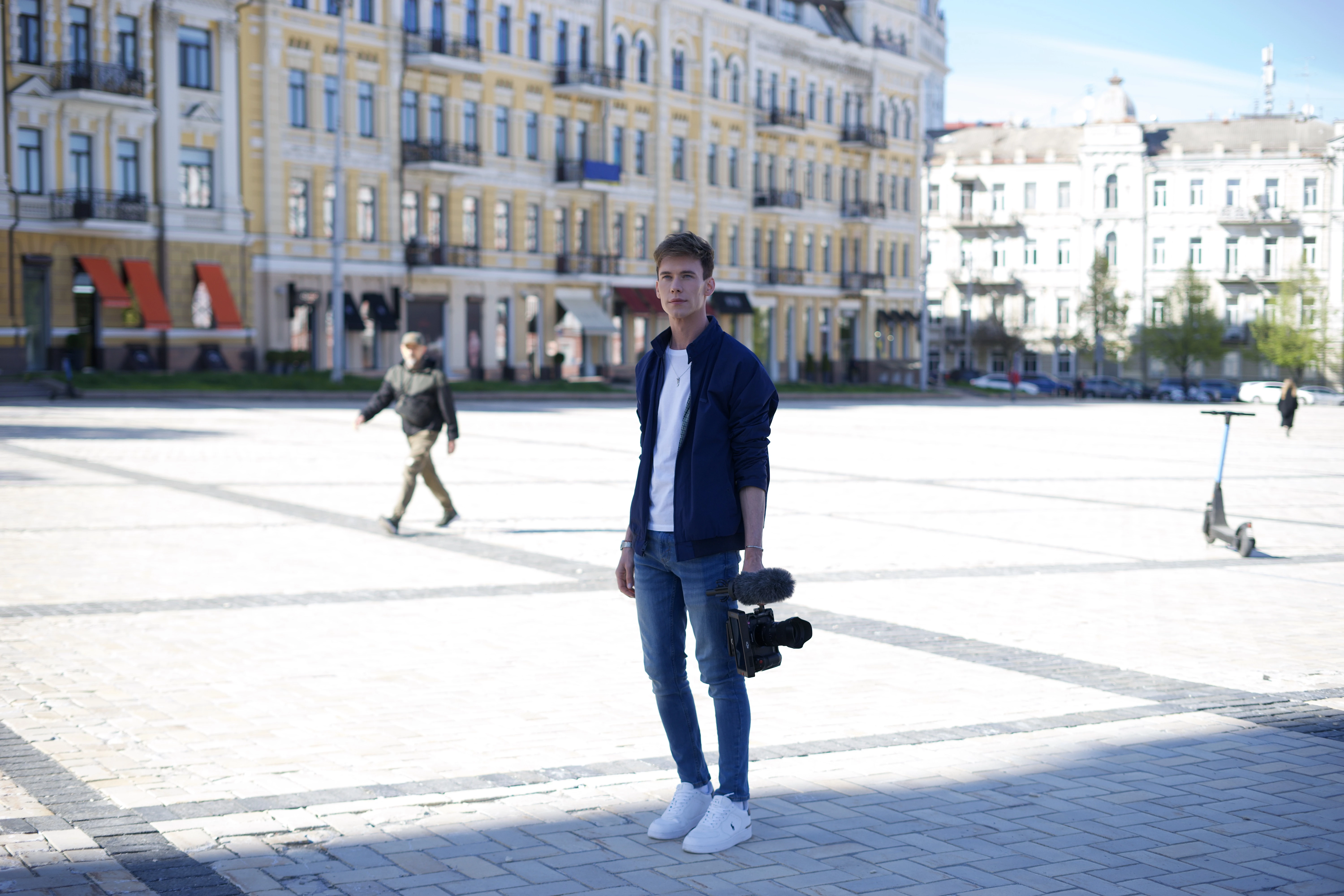
Om May 31 Kyiv turns 1544. In honor of the birthday of the ukrainian capital, we asked Irish journalist Caolan Robertson, who became famous for his reports, to share his impressions of the city. It turned out a true declaration of love.
I arrived on Valentine’s Day, 2023. Outside the railway station, women sold roses, couples hurried along, pretending not to be late for dinner. Above some flower shops, neon signs glowed, "24/7." A 24-hour florist sounds bizarre at first. Who’s buying roses at three in the morning?
Kyiv has answers: the man who forgot his anniversary, the woman off the night train, the soldier who turns up unannounced, the mother whose birthday starts at midnight, the couple who can't wait until morning to patch things up. Proposals, funerals, first dates, last chances—there’s always a reason for flowers. And if there isn’t, someone will make one up. You can tell a city by what it sells after midnight. London gives you pints, kebabs, and night buses that smell like broken dreams. New York throws blaring, beeping taxi cab horns at 3am. Kyiv? Kyiv gives you flowers.
The closest city to compare Kyiv to is Paris. People sit. They talk. They watch. They drag out a coffee for so long it would give a management consultant a panic attack. People in Kyiv have found every single way to mix things into coffee that Parisians would argue should never be possible. Espresso with tonic, matcha with orange, coffee with citrus, cold brews, foams, infusions, fruit teas—some brilliant, some mad experiments. But it’s not about the drink. It’s the ritual. A Kyiv café is never just a caffeine stop: it’s an office, confessional, salon, waiting room, date, hideout. Some cities lock up their beauty in museums and hotels. Kyiv spreads it around. It’s in the small details. A hook for every coat in the restaurant. A chair for your bag. Plastic wraps for your shoes to keep the floors dry. The small things that make everything that little bit more comfortable.
Kyiv treats weather like a personal enemy. In winter, snow gets dragged in on boots, and someone is always by the door with a mop, locked in a losing battle. Customer in, snow melts, mop out. Another customer, more snow, more mopping. The floor loses every half minute, wins it back thirty seconds later. The room stays clean. Outside can do what it wants. Inside, there are rules. My native Ireland gets this, too. Not the weather, obviously. Ireland understands the urge to make something lovely from whatever is available.
A tiny house with flowers in the window. A kitchen made ready for guests. Something is offered the second you walk through the door. Scones in Ireland, Salo in Kyiv. Hospitality first, nutrition? – that can come later.
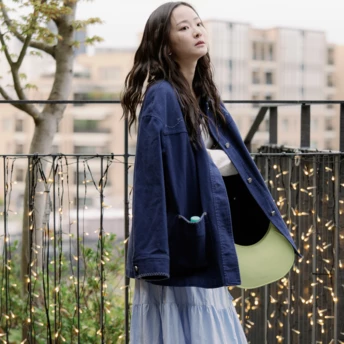
Kyiv’s apartment blocks look like generations have been arguing with them. Balconies boxed in, stretched, painted, patched, planted, glazed. Someone has built a greenhouse; someone else strung up lights. There’s a tiny table here, a tea spot there, squeezed above a roaring road. From afar, the buildings look patched up—up close, alive. This city isn’t built by architects; it’s made by its people.
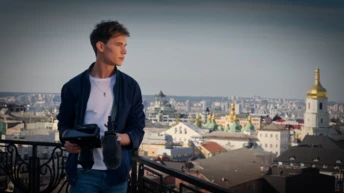
Around Golden Gate, down Andriyivskyy Descent, through the parks, over the bridge to the islands and along the river, Kyiv keeps catching itself in a good light. People stop for sunsets they have seen a hundred times and photograph them with the seriousness of a newcomer. The city is vain, but charmingly so. It knows exactly when the sun is hitting a dome, a chestnut tree, or a peeling yellow wall. That is Kyiv’s trick. It has lived with itself for more than a thousand years and still behaves as if it had just discovered a flattering angle.
There’s a morning on Volodymyrska Hirka that speaks clearer than any guidebook. At 5:30, people gather for the dawn. In London, that might mean a wellness scam or a police incident; in Kyiv, people just arrive, stand above the Dnipro as light creeps in. Someone plays piano. People sing, or listen. It's amazing.
That’s why people come to Kyiv with one idea and leave with another. You can’t explain this place from a distance. You have to walk it, dine in it, watch the sunset, and listen at sunrise. You have to notice the coat hooks, the flower stalls, the mad coffee, the spotless floors, the way people make space for each other without turning it into a show. But the flowers say it best. A city with flower shops on almost every block has not given up. It assumes someone is on their way to someone else. Someone has something to fix, celebrate, confess, honour, or begin. Someone will arrive at the station carrying roses. Someone will stand outside an apartment block with a bouquet hidden behind their back. Someone will buy flowers on the way home, not because the occasion demands it, but because the city has taught them that ordinary days deserve ceremony too.
In Kyiv, love has its own infrastructure. Stalls, buckets, paper, ribbon, hands arranging stems in the cold. Even when the shutters come down before curfew, the flowers remain there in the imagination of the city, waiting for morning, waiting for the next apology, the next birthday, the next reunion, the next reason.
And in Kyiv, there is always a reason.