All Eyes on Moda Productions in Paris
Promotion
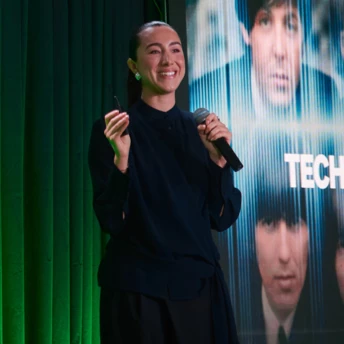
In a season marked by maximal spectacle, Moda Productions closed Paris Fashion Week on a very different note — one defined by restraint, discipline, and integrity of vision. The European production house, founded and led by Tracy, has earned a reputation for translating design into experience with surgical precision. This season, it set a new benchmark: a series of debuts unified by clarity, craftsmanship, and the belief that authenticity — not excess — is what endures.
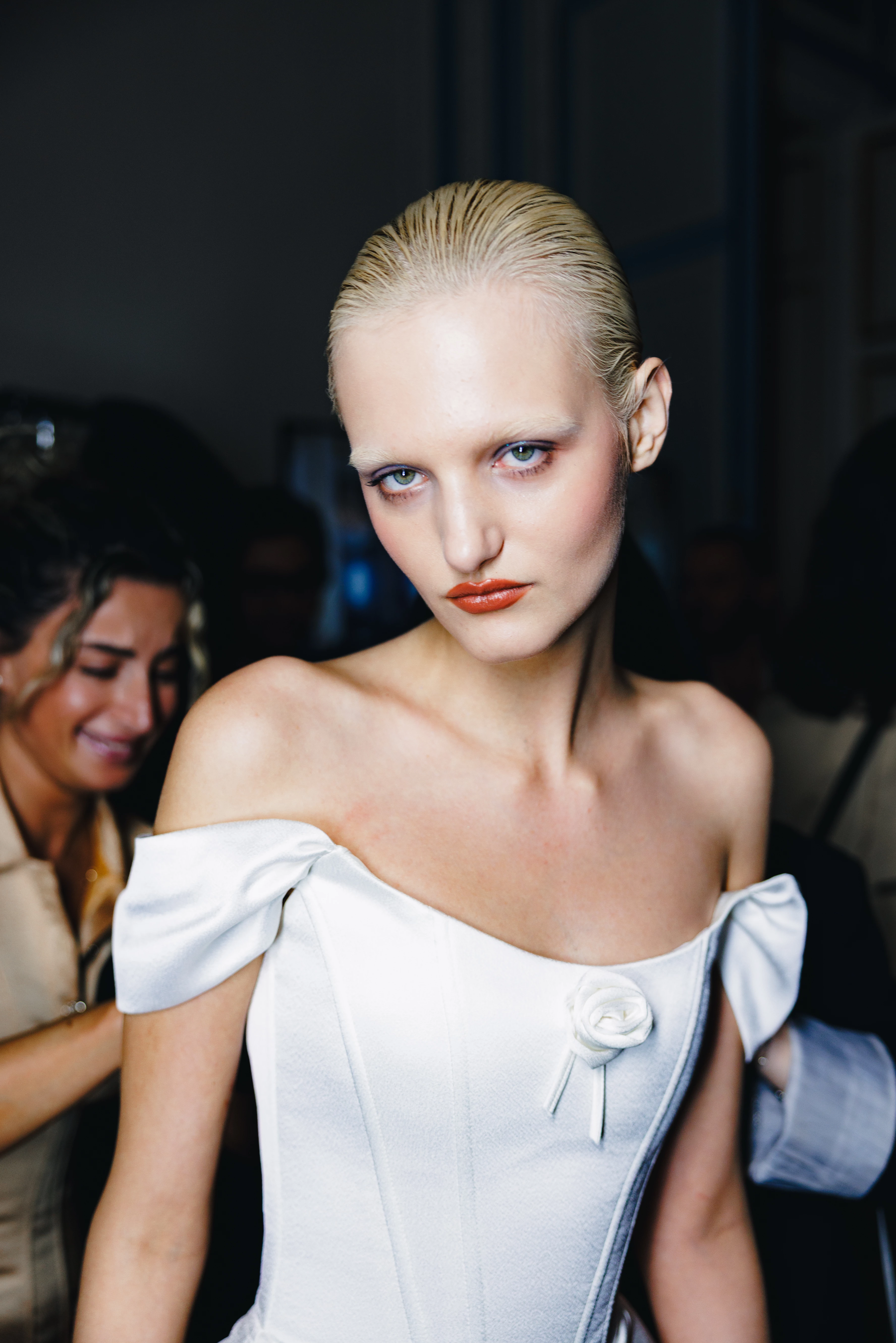
"The approach was simple," Tracy said. "Clean lines, measured light, and elements that show their quality up close and move with natural ease." Her formula is fast becoming a philosophy. Across collections, camera angles, pacing, and casting followed a single principle: the clothes lead; everything else supports. Within that framework, each designer's style stood out clearly, showing a new standard for high fashion that values clarity over noise and purpose over decoration.
MAZINI
Ukrainian label MAZINI by Maria Mazina made its Paris debut with a collection that embodied strength and timeless sophistication. Tailoring, long the brand’s foundation, appeared sharper and more decisive than ever: jackets cut in natural fibers held shape without rigidity; trousers maintained structure yet allowed easy movement. Shoulders were defined but not aggressive; waists, calibrated to the millimeter.
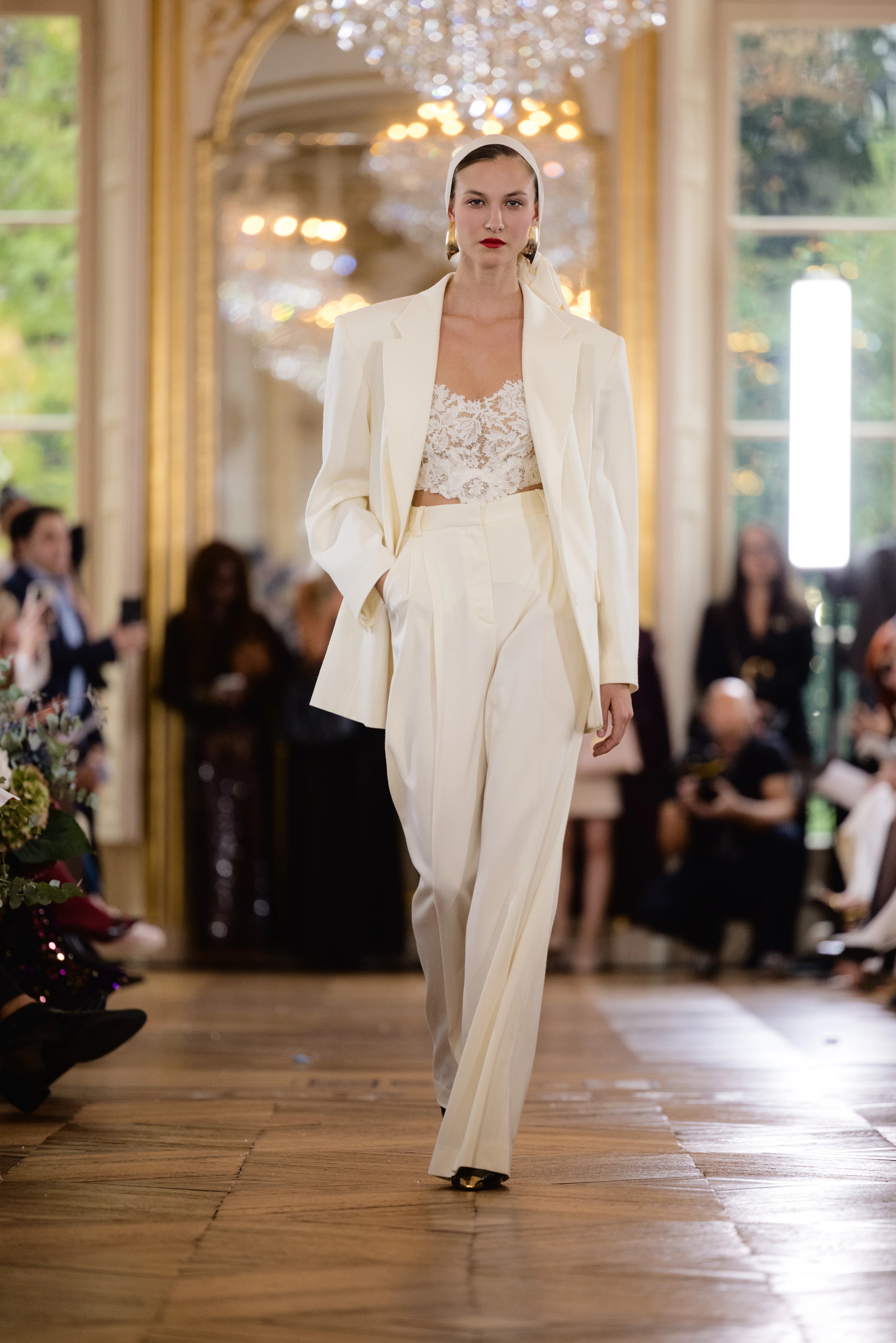
Founded in 2015 by Mazina — a former law lecturer who left academia to pursue design — MAZINI began as a small family enterprise with a mission to empower professional women through precise, enduring suiting. A decade later, the brand has grown into the fashion houses, co-led by Tatiana Prosnitskaya. Its success carries the weight of perseverance: production has continued through global challenges and war, each collection quietly reaffirming the resilience that defines Ukrainian craftsmanship. At Hôtel de Maisons, MAZINI’s debut felt like a statement — proof that refinement, discipline, and integrity still hold space in a fashion world that often moves too fast.
SAGIO
Budapest-based designer Alexander Sagio brought an architect’s discipline and a poet’s restraint to his Paris debut. The collection, shown under his eponymous label SAGIO, interpreted architectural concepts — proportion, structural balance, and rhythm.
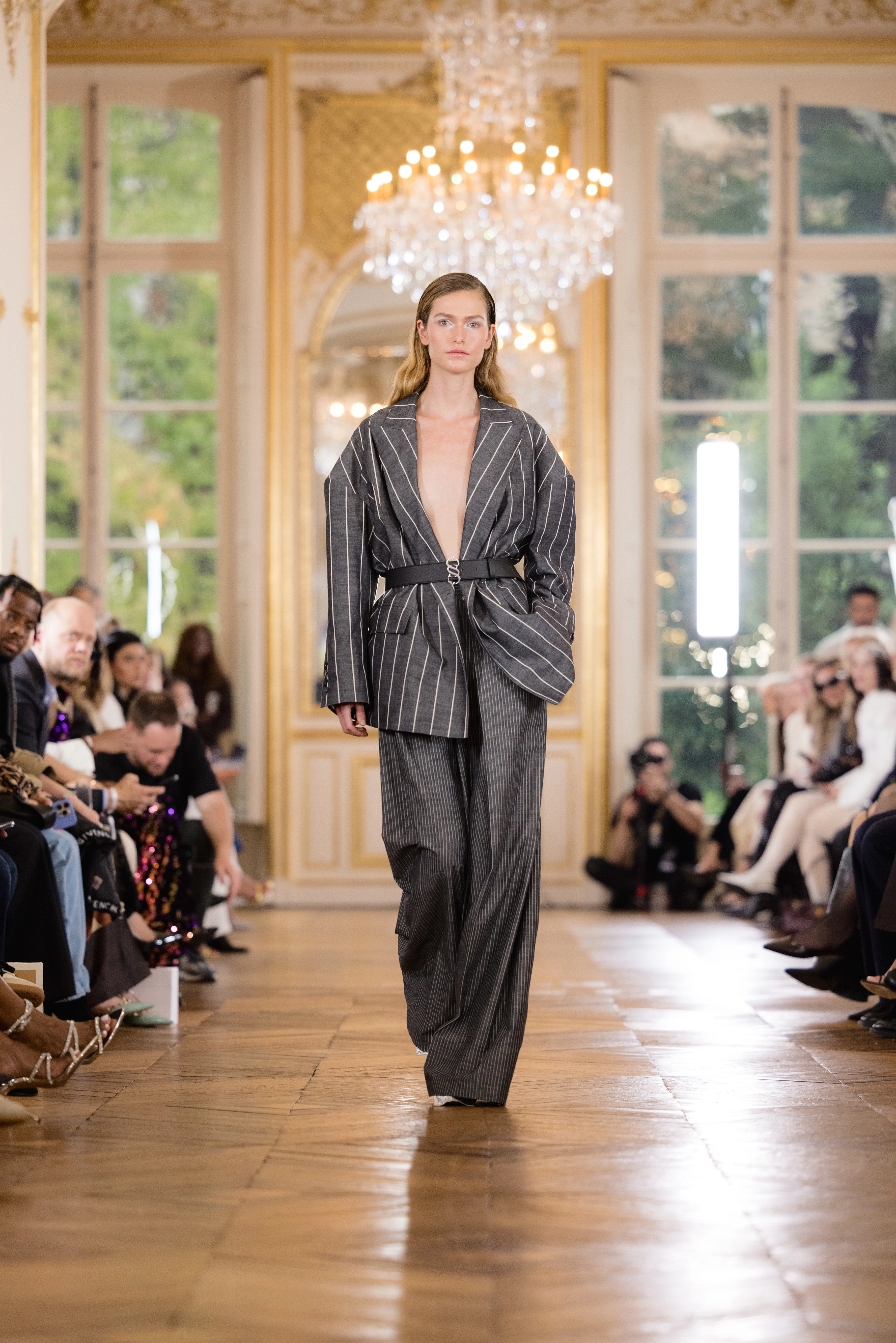
Sagio’s background in architecture shaped not just his silhouettes, but his process. His Budapest studio operates like a hybrid of atelier and laboratory, where master artisans merge traditional techniques with technical experiments. The Paris audience responded immediately. Influencers and editors reposted key looks, praising the clarity of vision and the collection’s tactile precision.
Jeevan
When Hussain Rehar brought his new label Jeevan to Paris, the debut carried the appeal and determination of a couture house. Rehar — already acclaimed in Pakistan for his namesake atelier — launched Jeevan in 2024 as a global ready-to-wear line that merges couture-level craftsmanship with modern functionality.
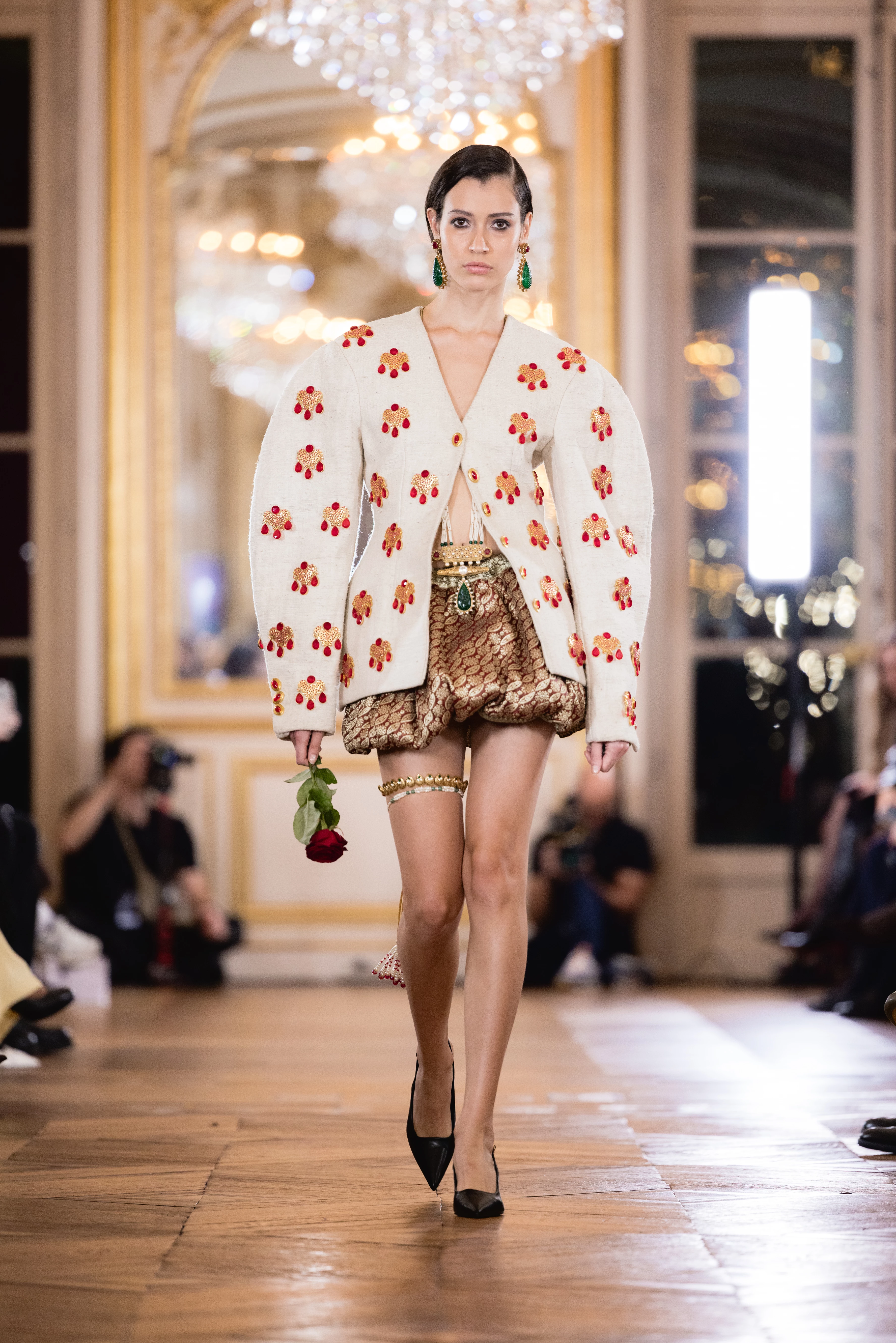
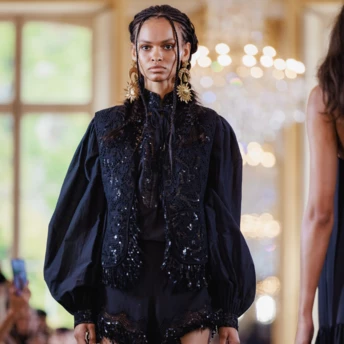
The collection was sculptural yet spontaneous. Shoulders were cut with sharp precision; waists cleanly defined; skirts and trousers fell in exact lines that read perfectly both on camera and in person. Embellishment, always present in Rehar’s work, appeared restrained: beadwork followed the logic of architecture, tracing seams like fine jewelry rather than decoration. The show itself reflected control from every angle — clean pacing, deliberate casting, and impeccable fit across models.
MOLMAUNI
For MOLMAUNI, designer Teo turned the runway into a study in light and presence. Her collaboration with Nuki Cosmetics, a vegan and cruelty-free brand founded by Georgian beauty innovator Nuki Koshkelishvili, staged one of the week’s most intimate and emotionally resonant presentations.
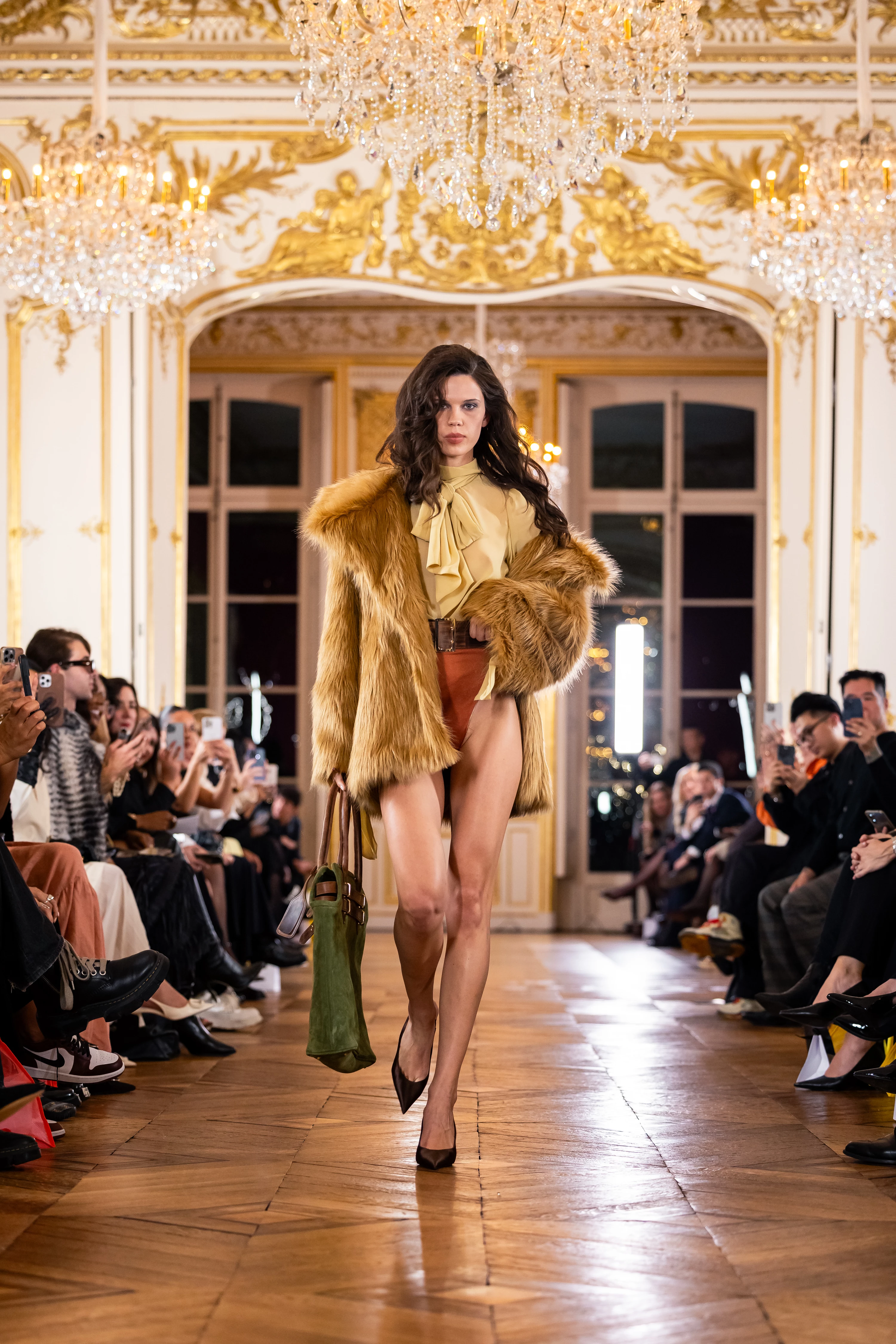
The show felt cinematic: garments cut close to the body, luminous skin catching the light in soft radiance, every gesture choreographed yet natural. Teo’s vision is grounded in lived experience. Raised in a refugee family, she often cites her mother and aunt as muses for their resilience and grace. "Fashion," she says, "should honor women, not consume them." That ethos shaped the collection — clothes that illuminated, rather than adorned, the wearer.
Alersundi
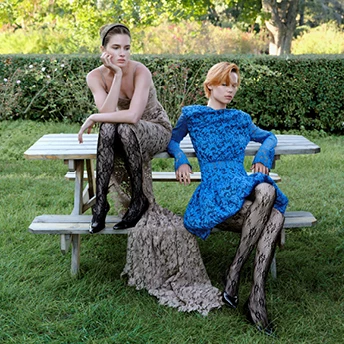
Seventeen years after founding her label in Tampico, Mexico, Alejandra Lersundi arrived in Paris with eveningwear that married precision and poetry. The presentation was a masterclass in control: sculpted gowns draped with mathematical accuracy, soft fabrics engineered into architectural forms, and hand-finished surfaces that shimmered like sunlight.
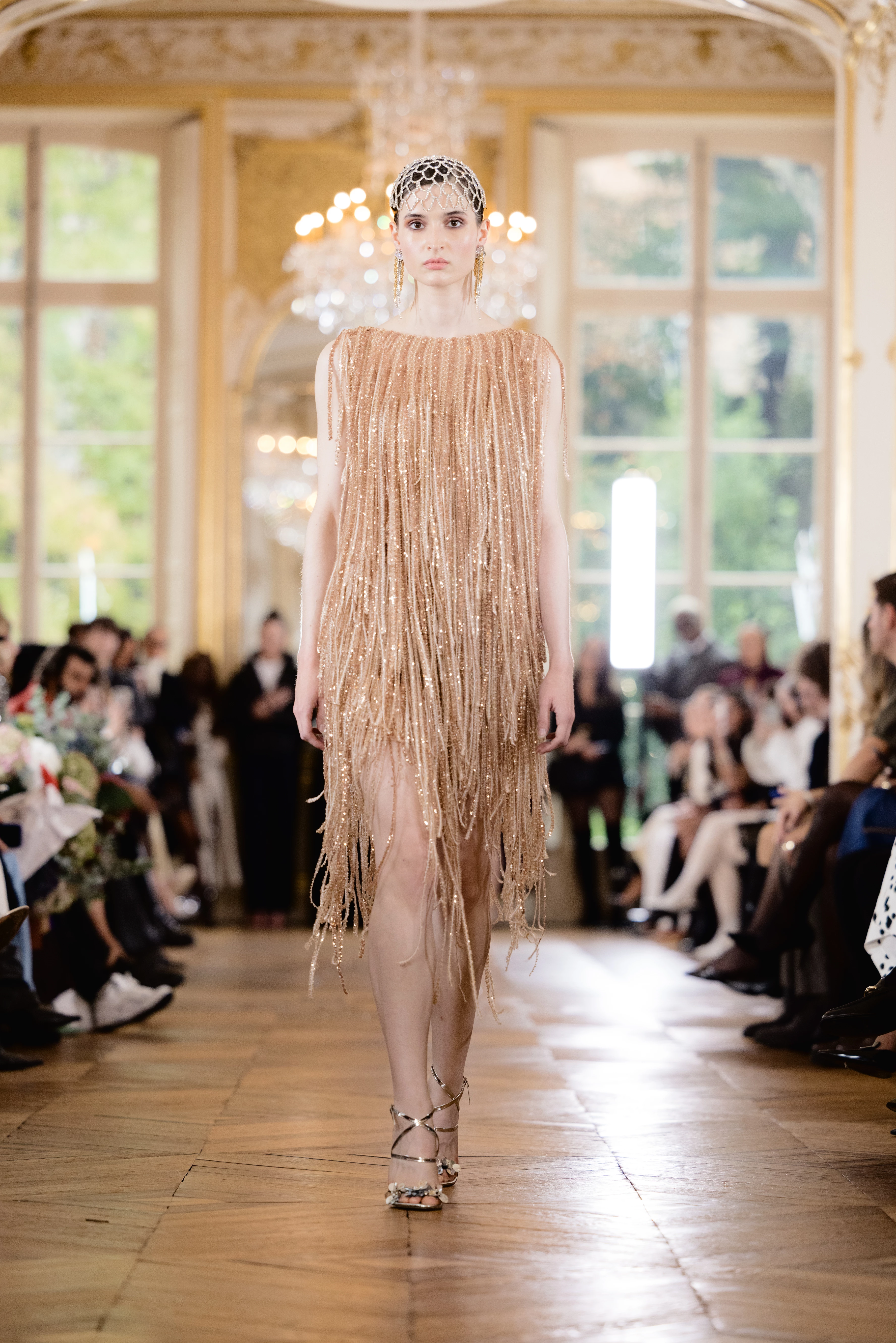
Trained across Monterrey, Barcelona, and Milan, Lersundi brings an international eye to Mexican craft. Her atelier’s made-to-order approach prioritizes intimacy over mass production, producing garments that read couture-level in both make and finish. The Paris debut crackled with electricity. Editors noted the discipline of the cut; buyers noted the commercial readiness; stylists noted the cinematic drape. Latin romanticism with Parisian precision.
Aleen Sabbagh
Lebanese label Aleen Sabbagh, founded by sisters Aleen and Natalie Sabbagh, made its Paris debut with a collection that balanced generosity of form with technical restraint. Each look revealed depth up close — refined textures, meticulous stitching, details designed not to impress but to endure.
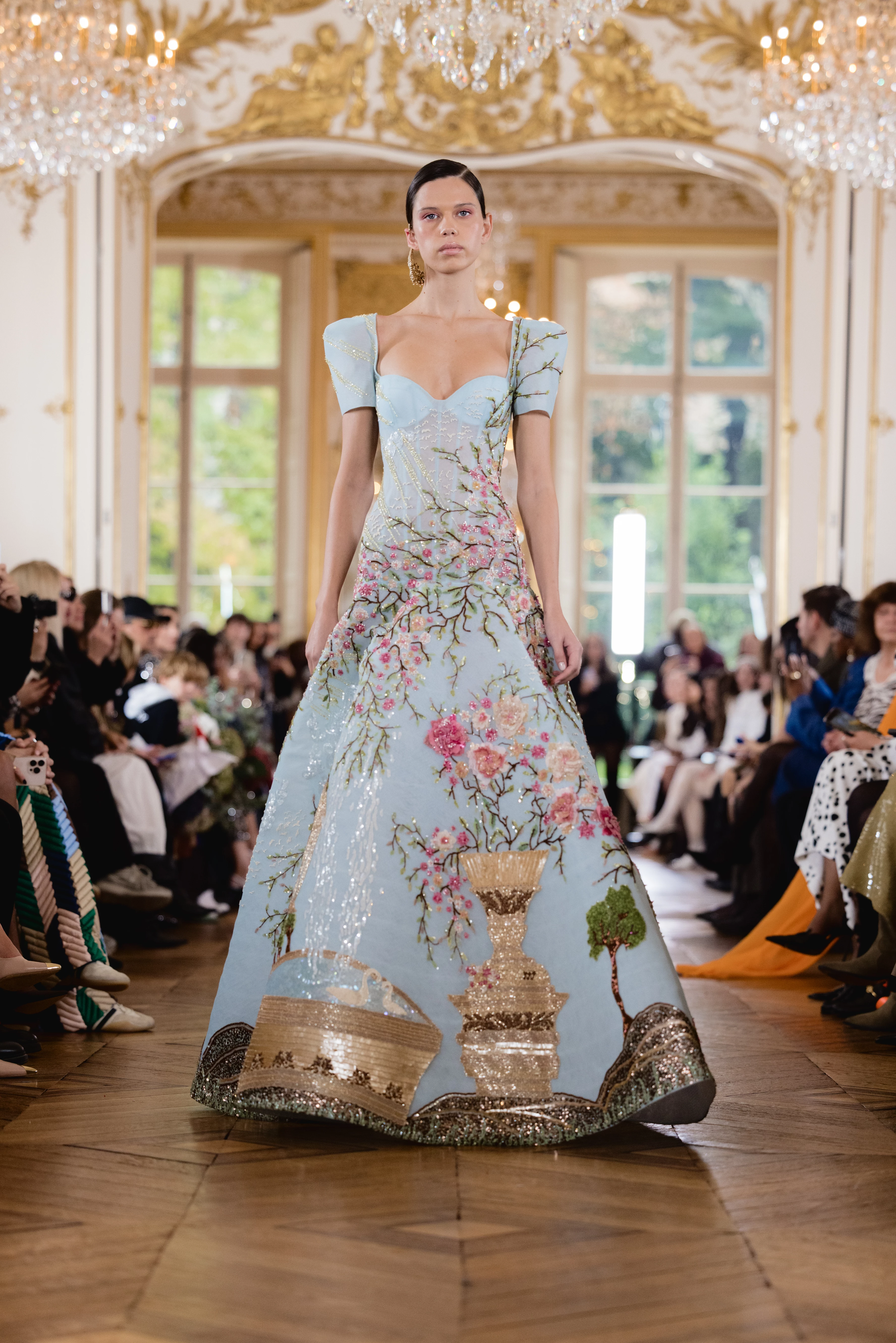
Working from their Beirut atelier, the Sabbagh sisters have built a practice rooted in craftsmanship, environmental consciousness, and artistic clarity. The Paris presentation distilled those values into a cohesive, emotionally resonant narrative. Garments reflected an understanding of couture not as status, but as stewardship. For many in attendance, the debut represented a hopeful chapter in Lebanese fashion: a new generation of designers translating cultural depth into global relevance.
RAXXY
RAXXY by William Shen approached fashion as engineering. His debut collection at Paris Fashion Week transformed outerwear into kinetic sculpture, merging insulation technology with mathematical design. Shen’s patent-protected modular technique replaces print or embroidery with structure itself — down-filled geometric blocks that create buoyant, articulated movement. Each piece expands and contracts like living architecture.
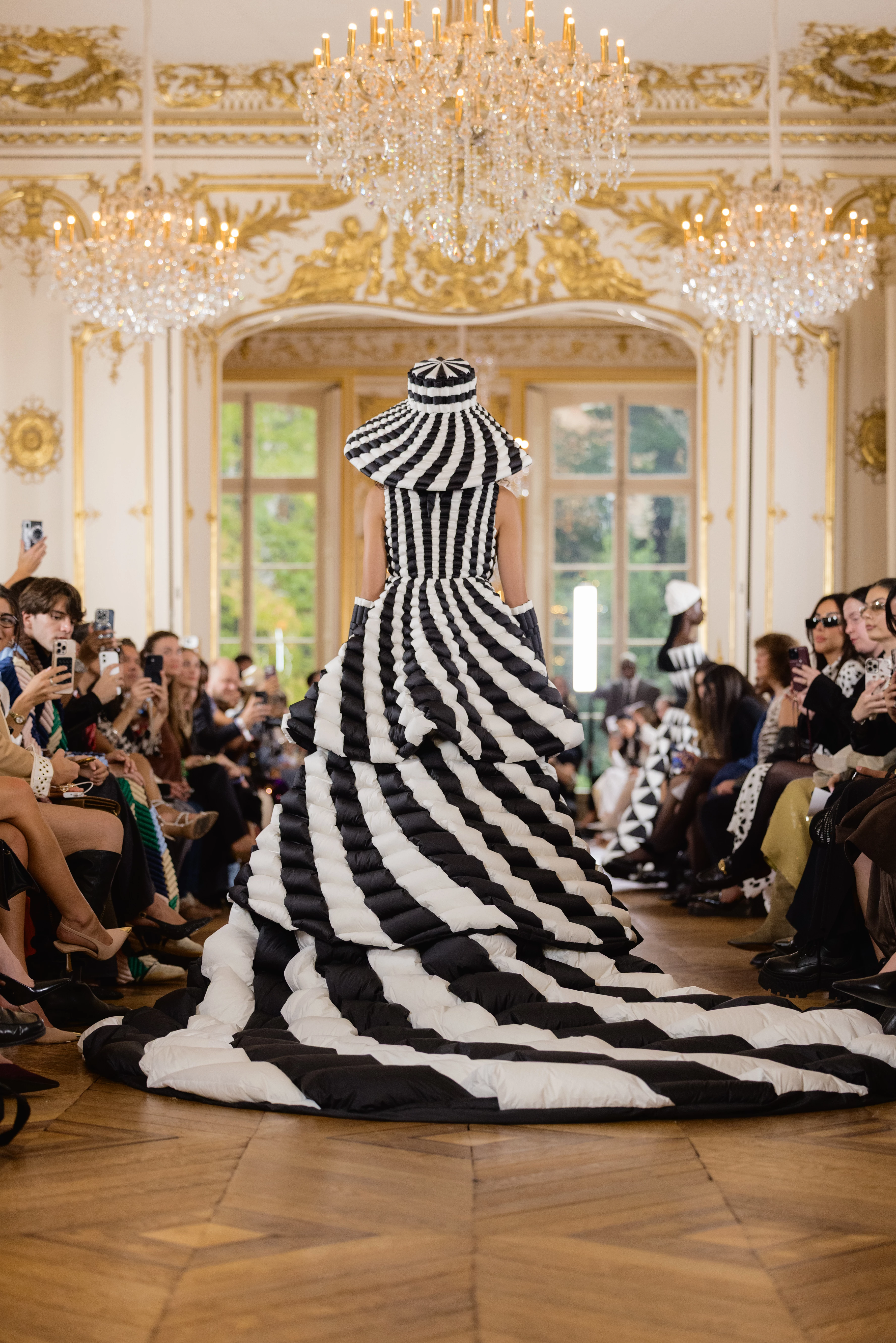
Yet the brilliance of RAXXY lies not just in its innovation, but in its emotion. The garments, rigid in concept, became unexpectedly human in motion. Already a name in global collaborations, Shen’s Paris debut felt like the start of a new chapter: one where technology and touch coexist.
Ragged Romances
Vietnamese designer Rosii Nguyen turned the idea of bridalwear inside out. Her label, Ragged Romances, made its Paris debut with A World Within — a collection that treated ceremony as movement, not moment. Layered tulle, translucent sheers, and painterly colorwork floated down the runway in motion.
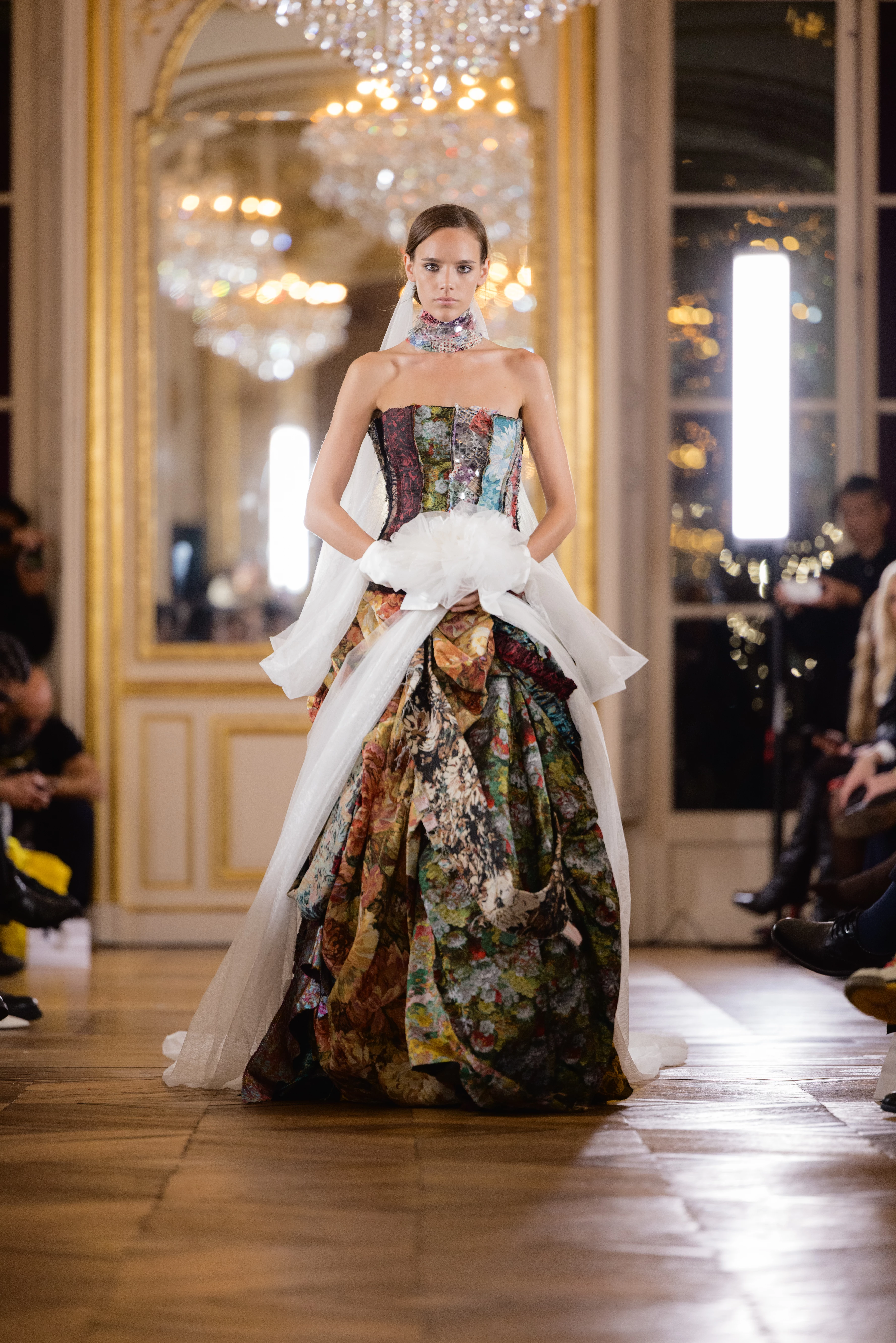
Nguyen, an RMIT alumna who once studied commerce, founded Ragged Romances after failing to find a wedding gown that reflected her personality. That personal frustration became her design mission: to craft garments that allow women to appear as themselves, not as ideals. Her Paris show embodied that conviction. Ragged Romances felt like a reminder that love — and fashion — are most powerful when they evolve.
POW Studio
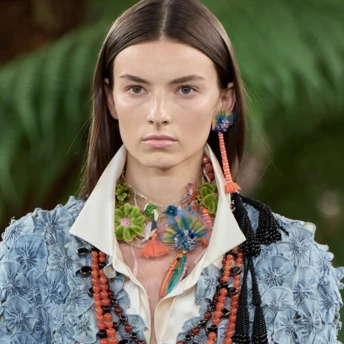
Swedish label POW Studio closed Moda’s series with a burst of color and precision. Founded by Ida Rosengren Tengvall in Malmö, the brand specializes in ultra-light statement earrings — architectural in form, featherlight in weight. Each piece is hand-assembled in Sweden, crafted with slow-fashion intent and a focus on individuality.
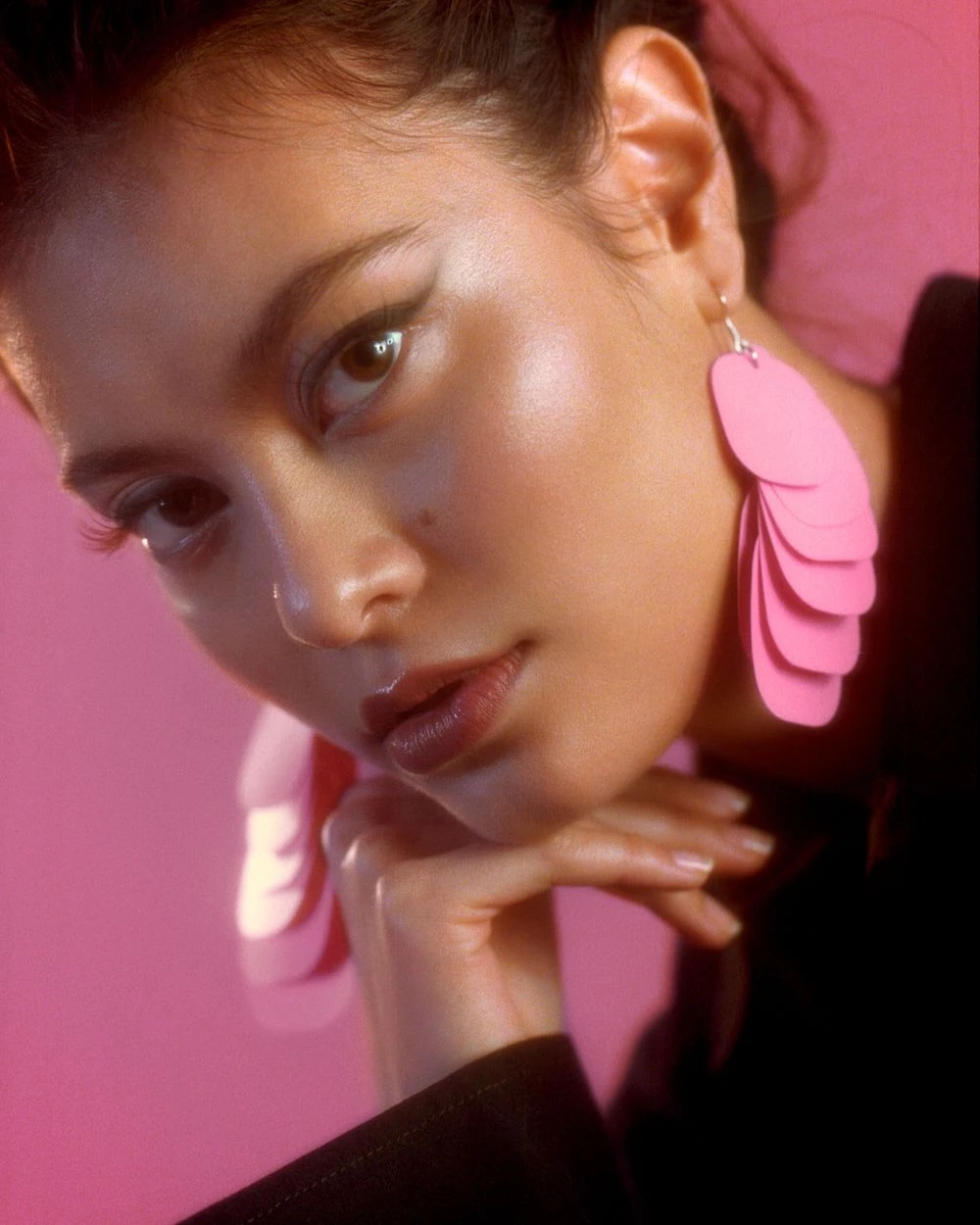
On the Paris runway, the jewelry added punctuation rather than noise: saturated color, balanced proportions, pieces that framed the face without overpowering it. Tengvall, a graduate of the Swedish School of Textiles and London College of Fashion, began POW in 2018 from a simple frustration: she couldn’t find earrings that were bold yet wearable. Her solution has become her signature — jewelry as empowerment, made to be lived in.
The Moda Standard
Under Tracy’s direction, Moda Productions has become one of the most influential institutions in contemporary fashion presentation. This Paris season proved why. What began as a production company now operates as a creative ecosystem — one that bridges logistics with aesthetics, commercial goals with emotional truth.
Every presentation shared a through line: integrity of process, respect for craft, and an insistence that fashion’s power lies not in excess, but in execution. "Integrity-first showmaking" is what Tracy calls Moda's approach, and it shows.
CREDITS
Production @modaproductionsofficial
Founder @tracy__murray
Producer @ameliepimont
Talent & Brand Relations @_alielor
Backstage Manager @sofia_vfxcamera
Art & Beauty Director @omayma.ramzy
Style Director @iamsaraacevedo
Model coordinator @ver.ojeda
Set Design @_nikkinel_
Fashion assistants @millaboch @thiravigah @thiravisha
Host @kevinfashioned
Fashion Team @Fashion_4futures @fffashionweekhair
Hair Director @hauseoflino
Hair Products @kevin.murphy
Makeup Director @michellewebbmakeup
Visual Director @christiandurocherphotography
Videographer @duncan_dimanche
Shot by @matthieusoreygarnier
BTS Photographer @celinmvy
Fashion Icon Award @tobi_rubinstein
Cause @boldn.society
Jewelry Showroom @pow_studio
Sponsors @a80paris, @ajen.care, @floraandfoliageco, @forestlyfoods, @franui.fr, @helloa_bijoux, @labruket, @len_skincare, @rise_drinks